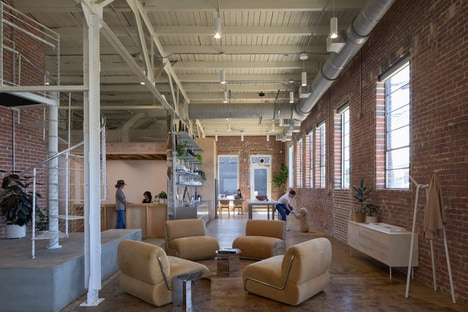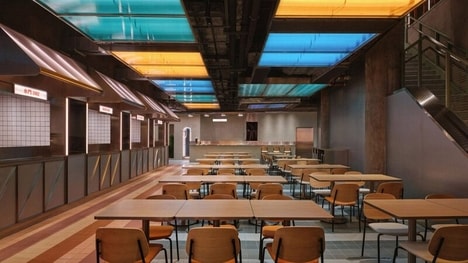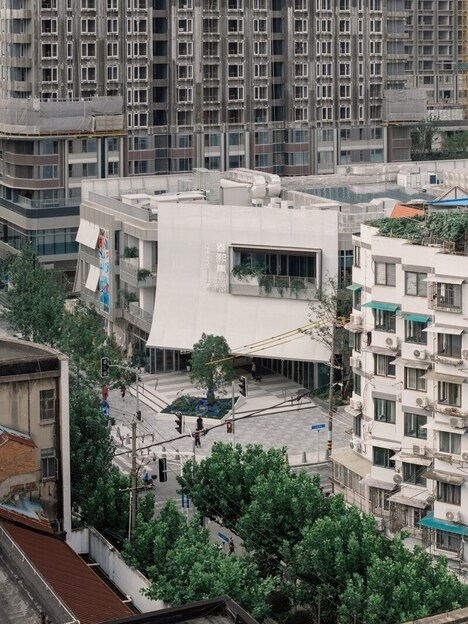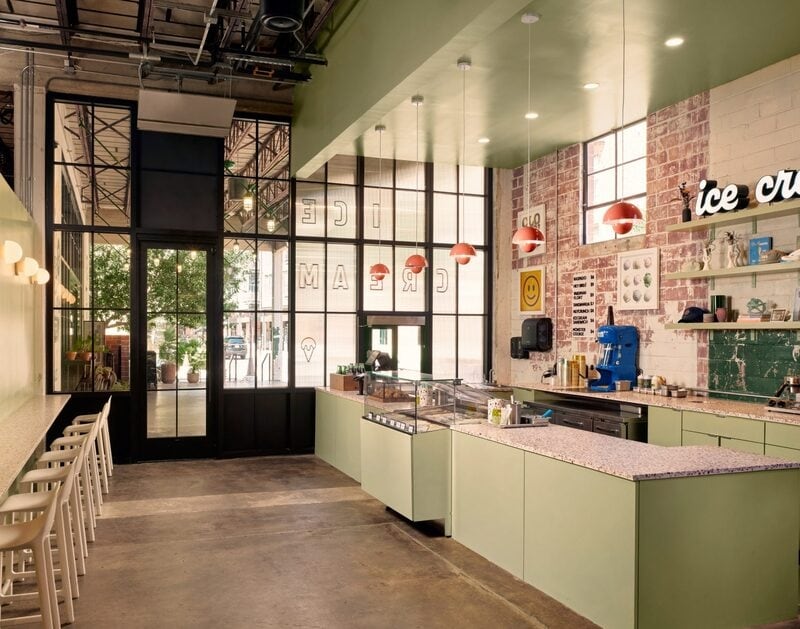
The Pullman Market adaptive reuse project by Clayton Korte transforms a defunct glass factory in San Antonio’s Pearl District into a high-impact culinary and cultural hub. Originally home to Samuels Glass, the 54,000-square-foot structure retains its original clay tile walls, brick masonry, and exposed steel trusses. It is preserving the building’s weathered texture while integrating sustainable upgrades like polished concrete flooring and operable skylights. The intervention highlights material honesty and reduces demolition waste while enhancing spatial flow and passive daylighting.
There are 150 vendors inside, which contribute to a bustling marketplace filled with restaurants, artisan producers, and specialty grocers. A central courtyard links the food hall to Pearl’s surrounding pedestrian network, while low-E glazing and warm wood trusses foster a welcoming atmosphere. The project blends adaptive reuse and architectural storytelling—inviting locals and visitors to engage with a layered space that connects San Antonio’s industrial past with its creative present.
Image Credit: Casey Dunn
Why This Trend Is Growing
- Adaptive Reuse in Culinary Spaces
- Reviving historical structures for food halls offers a fresh take on culinary experiences by combining heritage architecture with modern design.
- Sustainable Retail Environments
- Integrating eco-friendly features such as low-E glazing and concrete flooring highlights a commitment to sustainability in commercial design.
- Cultural Storytelling Through Architecture
- Utilizing historical elements in design provides a narrative-driven experience that connects visitors with the historical context of a location.
Industries Being Reshaped
- Culinary Tourism
- Transforming historic buildings into vibrant food halls boosts local tourism by offering unique dining experiences linked to the locale's identity.
- Retail and Commercial Real Estate
- The trend of using defunct industrial spaces for commercial purposes offers new opportunities in property development and space optimization.
- Sustainable Architecture
- As demand grows for environmentally conscious buildings, the focus on preserving original materials while reducing waste presents a market ripe for innovation.