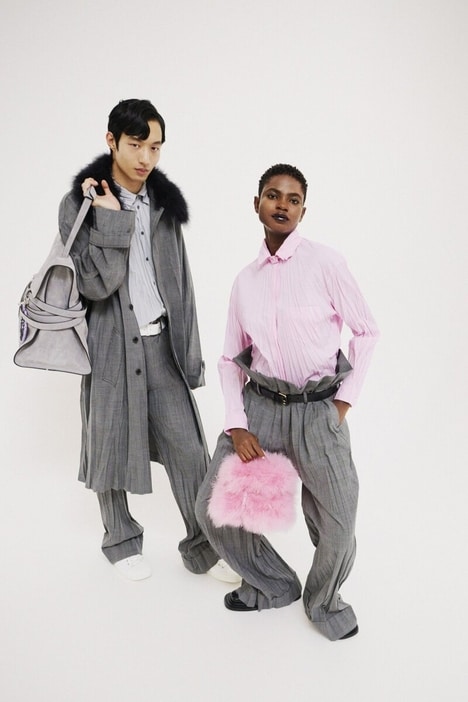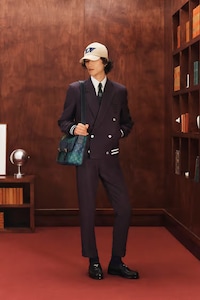
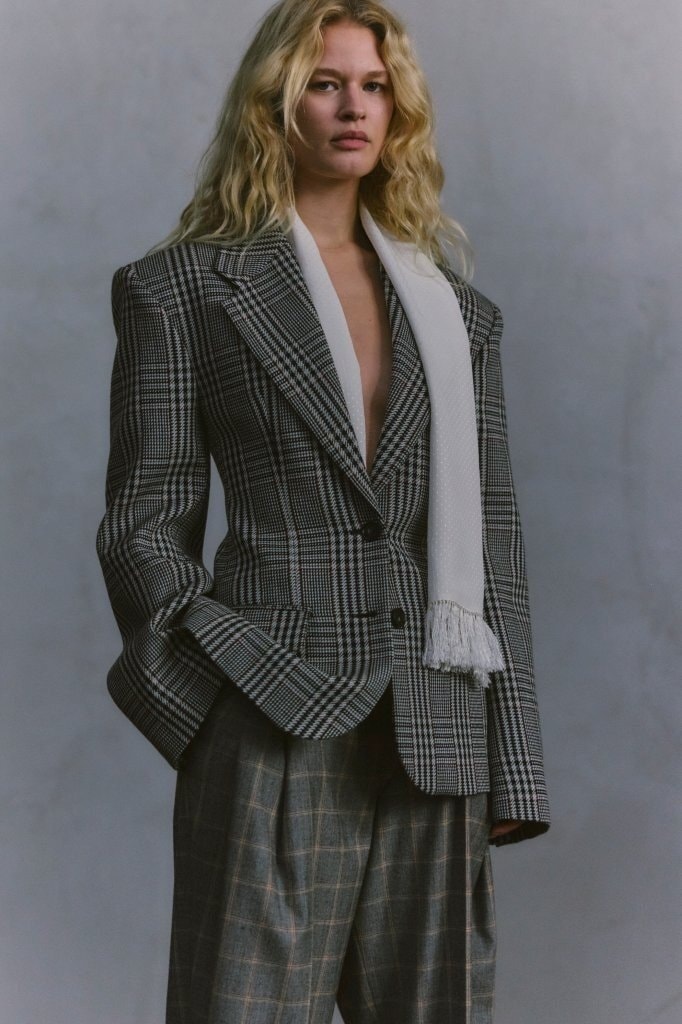
Stella McCartney's Pre-Fall 2026 collection functions as a retrospective synthesis of the designer's enduring ethical philosophy and signature aesthetic motifs. With this capsule, the label deliberately re-engages with archival inspirations, referencing equestrian imagery, Savile Row tailoring, and 1970s suiting. These timeless design sensibilities are effectively reinterpreted through the brand's established lens of animal-free materials and sustainable practices.
Stella McCartney's contemporary design and ethical approach to the Pre-Fall 2026 collection are evident in items like corduroy-denim hybrids, crystal-embellished tailoring, and accessories utilizing regenerated nylons and leather alternatives. For longstanding admirers of the brand, the collection serves as a meaningful archive dive — an opportunity to reference iconic silhouettes and prints that reaffirm the designer's creative lineage and commitment to core principles.
Image Credit: Stella McCartney
Key Themes Behind This Trend
- Archival Inspirations
- Brands leverage historical design elements, creating a fusion of nostalgia and modernity for consumers seeking timeless yet contemporary styles.
- Sustainable Fashion Innovation
- There is a growing emphasis on animal-free and eco-friendly materials, reflecting the industry's shift towards more responsible and ethical production methods.
- Equestrian Imagery Resurgence
- Designers are increasingly drawing on equestrian motifs, offering a fresh take on classic themes that appeal to a sophisticated clientele.
Where This Applies
- Apparel Manufacturing
- Manufacturers explore sustainable production techniques and materials to meet the demand for ethical and environmentally friendly fashion.
- Textile Innovation
- The textile industry focuses on developing advanced materials like regenerated nylons and leather alternatives that cater to eco-conscious fashion labels.
- Retail Fashion
- High-end retailers incorporate curated capsule collections that merge past inspirations with modern expectations, appealing to consumers' evolving tastes.