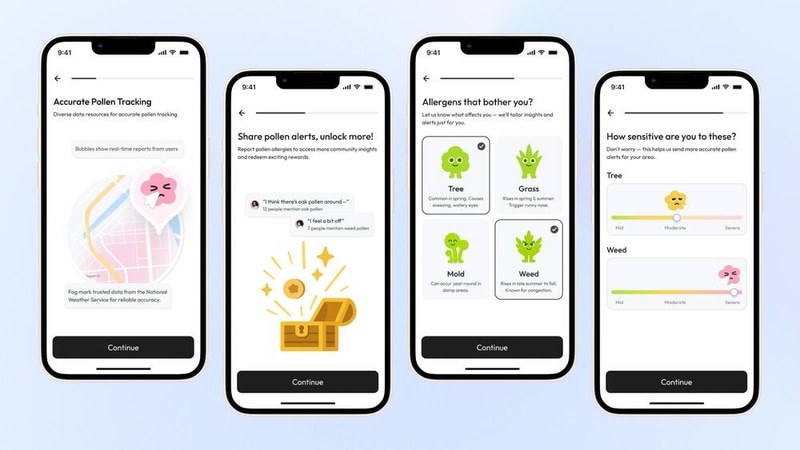
Recognized in the 2026 iF Design Awards, PollenNav is tackling one of allergy sufferers' most persistent frustrations: the gap between broad pollen forecasts and the hyper-local reality of navigating a city in bloom.
For the millions worldwide whose daily lives are disrupted by debilitating symptoms, the stakes couldn't be higher. Yet conventional city-level forecasts continue to miss the micro-hotspots that trigger the worst reactions, sometimes traced back to a single tree on a single block. Blanket alerts were never designed for the nuance urban allergy sufferers actually need. PollenNav bridges that gap by pairing trusted National Weather Service data with crowd-sourced symptom reports, cross-verified for accuracy, and AI technology that personalizes alerts and low-pollen routes to each user's unique allergy profile—all visualized through an intuitive, color-coded map and dashboard.
Why This Trend Is Growing
- Hyper-local Environmental Intelligence
- Localized, block-level pollen mapping reveals micro-hotspots that enable precision-aware services previously impossible with city-scale forecasts.
- Symptom-crowdsourced Data Fusion
- Combining verified user-reported symptoms with institutional weather feeds creates a hybrid dataset that can undercut reliance on coarse models and drive adaptive monitoring systems.
- Personalized Route Optimization
- Tailoring low-exposure navigation to individual allergy profiles introduces opportunity for context-aware routing engines that balance health risk, time, and convenience.
Industries Being Reshaped
- Urban Mobility
- Navigation platforms and micromobility providers can be reshaped by integrating exposure-aware routing that changes route selection criteria from speed to health optimization.
- Healthcare & Allergy Management
- Digital therapeutics and clinical care pathways stand to incorporate real-world exposure data to refine diagnosis, treatment personalization, and outcome monitoring.
- Smart City Infrastructure
- Municipal sensor networks and environmental monitoring programs could evolve into citizen-validated ecosystems that influence planting policies and public space management.