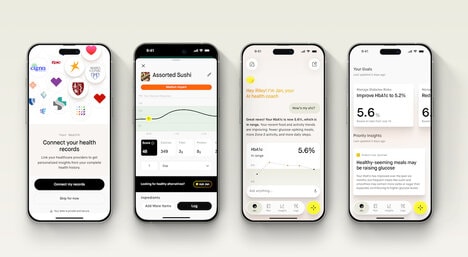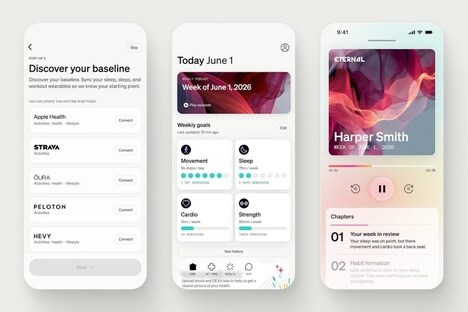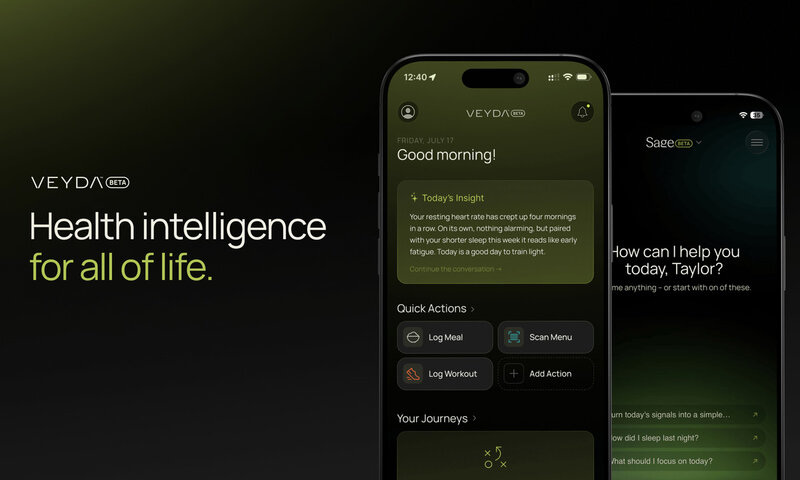
Veyda, a health intelligence company founded in 2024 and based in West Hollywood, has opened the private beta of its personal health platform, which offers a unified lifelong health record and AI-driven intelligence layer designed to consolidate fragmented health data from labs, wearables, medical records, supplements, and lifestyle signals into a single accessible location.
Veyda's personal health platform, available initially on iPhone with daily invitation rollouts, sits above existing health products and services. It allows members to connect Apple Health plus one additional device — such as Oura, Whoop, Apple Watch, Eight Sleep, or Garmin — and upload lab results, records, supplements, medications, and conditions to build a comprehensive, continuously updated health history.
Veyda Intelligence, the personal health platform's purpose-built AI, reasons across all connected data and provides evidence-grounded insights drawn from the member's own record and a curated library of peer-reviewed medical literature and clinical guidelines.
Image Credit: Veyda
What Makes This Trend Stand Out
- Unified Health Records
- Fragmented medical, wearable, lab, and lifestyle data is converging into longitudinal consumer-controlled profiles that create space for smarter prevention, personalization, and care navigation models.
- AI Health Intelligence
- Evidence-grounded AI layers that reason across individual health histories and clinical literature are reshaping how consumers interpret signals, risks, and next-best health decisions.
- Wearable Data Integration
- Continuous biometric streams from devices such as rings, watches, and sleep trackers are becoming foundational inputs for adaptive health platforms with more contextual insights.
Sectors Adopting This
- Digital Health
- Personal health platforms are expanding beyond standalone apps into intelligence hubs that unify records, coaching, monitoring, and clinical-grade recommendations.
- Consumer Electronics
- Wearable and connected-device ecosystems gain new value as their sensor data feeds broader personal health intelligence networks rather than isolated dashboards.
- Healthcare Services
- Longitudinal patient-owned data environments may shift care delivery toward more proactive, informed, and interoperable relationships between individuals and providers.