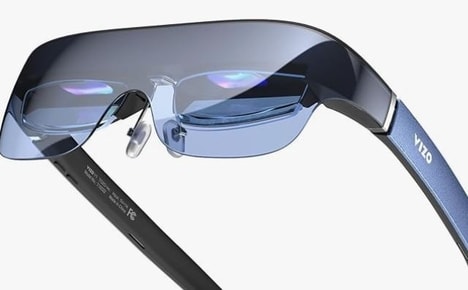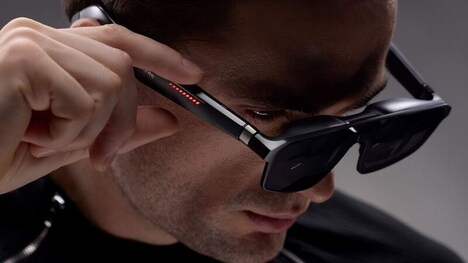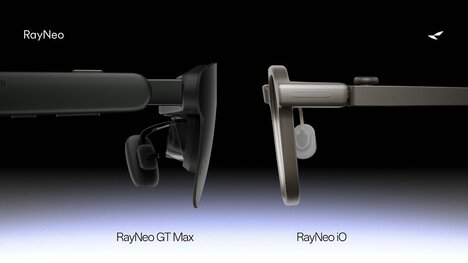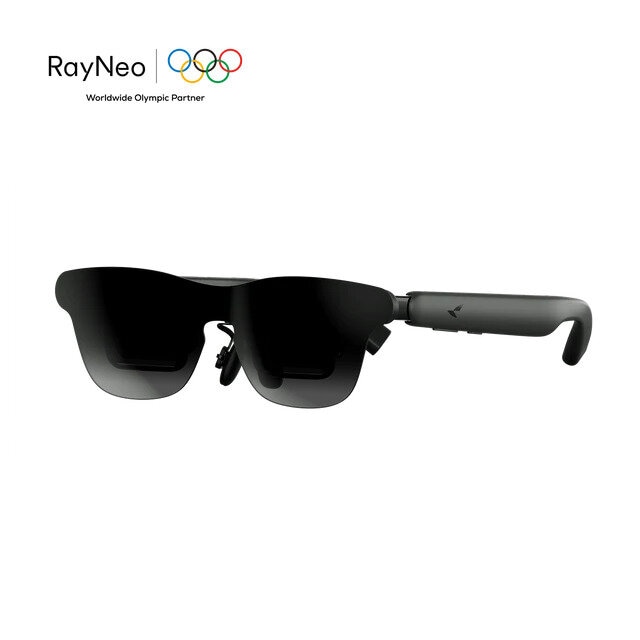
RayNeo’s GT Max AR glasses are a USB-C-connected wearable that projects a 267-inch virtual screen using a Micro-OLED panel with a 59-degree field of view. The glasses pair visual scale with onboard audio and spatial tracking and were listed at a discounted price of $399.
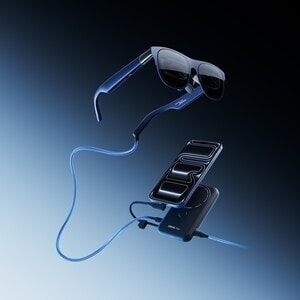
An optional Pocket TV Pro accessory enables Dolby Vision playback. The Zone 360 chip offers three spatial tracking modes: Follow, Steady and Pinned. These keep the virtual display anchored as the wearer moves. Sound comes from a quad-speaker system tuned with Bang & Olufsen and includes Whisper Mode 2.0 for more private listening.
For consumers, this creates a portable, cinemalike viewing experience for movies, games and shows. The product reflects growing interest in wearable displays as practical alternatives to fixed screens, while the optional Pocket TV Pro gives RayNeo an accessory-led opportunity to expand the device’s capabilities and generate additional hardware revenue.
Image Credit: RayNeo
Key Themes Behind This Trend
- Portable Giant-screen Viewing
- Compact AR eyewear is turning small personal spaces into large-format entertainment environments, creating openings for screenless media consumption beyond living rooms and theaters.
- Accessory-led AR Ecosystems
- Add-on media modules and companion devices extend wearable display functionality, indicating new revenue models around modular upgrades rather than standalone hardware alone.
- Private Spatial Entertainment
- Integrated audio, spatial anchoring and discreet listening features are reshaping immersive viewing into a more personal format for travel, shared homes and mobile gaming.
Where This Applies
- Consumer Electronics
- Wearable Micro-OLED displays are expanding the category beyond phones, tablets and TVs by positioning glasses as practical everyday screens.
- Streaming Media
- Dolby Vision-capable AR playback introduces a premium viewing surface for subscription platforms seeking more immersive and portable content experiences.
- Gaming Hardware
- Low-footprint virtual screens with spatial tracking support console, cloud and mobile gaming experiences that feel cinematic without requiring dedicated display setups.