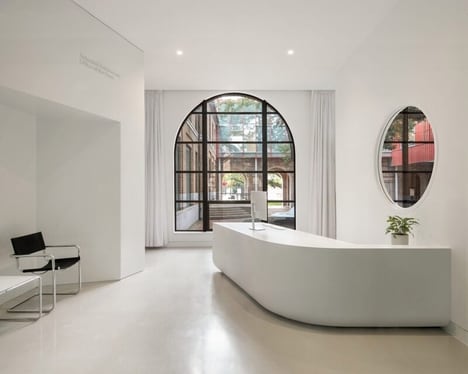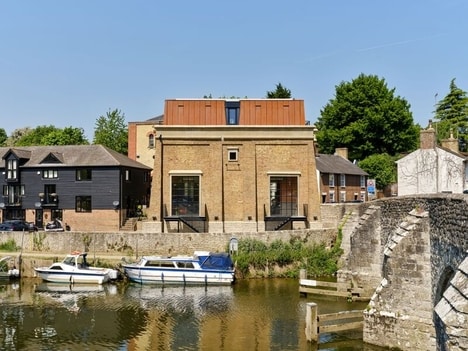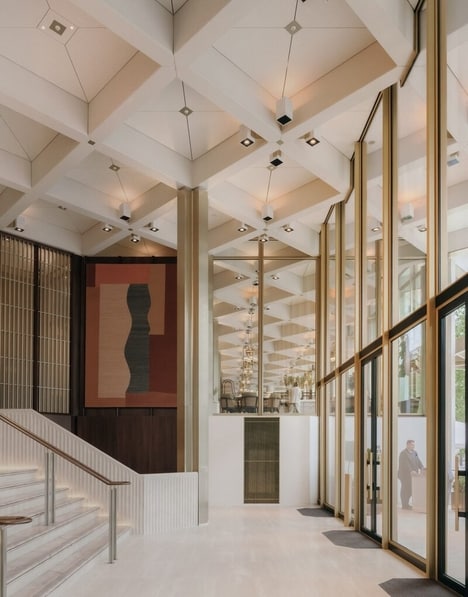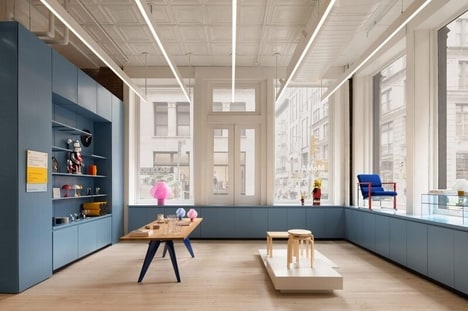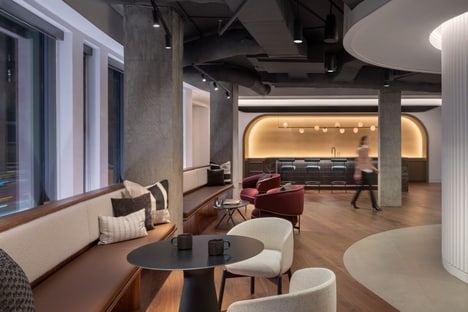
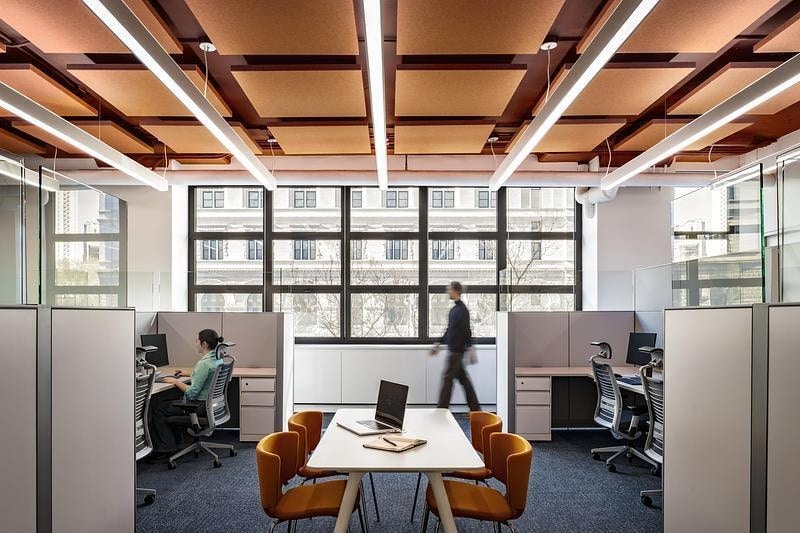
Shakespeare Gordon Studio has completed a comprehensive renovation of the third floor of the Pearl Building at the New York City College of Technology. This project transforms a 17,000-square-foot former munitions factory, which was built in 1922, into four administrative office units with distinct color identities and that are linked by a central hallway.
The renovated Pearl Building interior features exposed structural columns, large windows from the original concrete curtain walls, color-coded acoustic ceiling panels, a newly expanded conference suite, and upgraded building systems, including hazardous material abatement and ADA-compliant bathrooms.
The renovation deliberately uses bright yellows, greens, blues, oranges, and purples, not just for aesthetics but as a wayfinding system, so someone looking for a specific department can follow a color down the long central spine. The mix of private offices and open plan areas offers flexibility for changing needs, as well.
Image Credit: Alexander Severin
Why This Trend Is Growing
- Adaptive Reuse of Industrial Buildings
- Repurposing century-old factory shells into contemporary administrative and educational spaces presents opportunities to undercut new-construction costs and shorten delivery timelines through preserved structural assets.
- Color-coded Wayfinding Systems
- Integrating bold, consistent color identities into circulation networks creates intuitive navigation that can reduce signage dependence and enable modular spatial branding across large campuses.
- Flexible Mix of Private and Open Workspaces
- Designing floorplans that balance enclosed offices with open-plan zones introduces adaptable occupancy models capable of supporting shifting institutional needs and hybrid workforce patterns.
Industries Being Reshaped
- Higher Education Facilities
- Campus renovation programs that convert underused industrial structures into administrative and academic hubs can reshape campus footprint strategies and capital allocation toward retrofit-first portfolios.
- Commercial Office Development
- Developers focused on leasing can exploit landmark conversions with distinctive architectural character and wayfinding systems to command premium rents and differentiate offerings in saturated markets.
- Historic Preservation and Remediation
- Combining hazardous material abatement, ADA upgrades, and heritage facade retention presents integrated service models that could disrupt traditional separation between conservation contractors and modern MEP specialists.