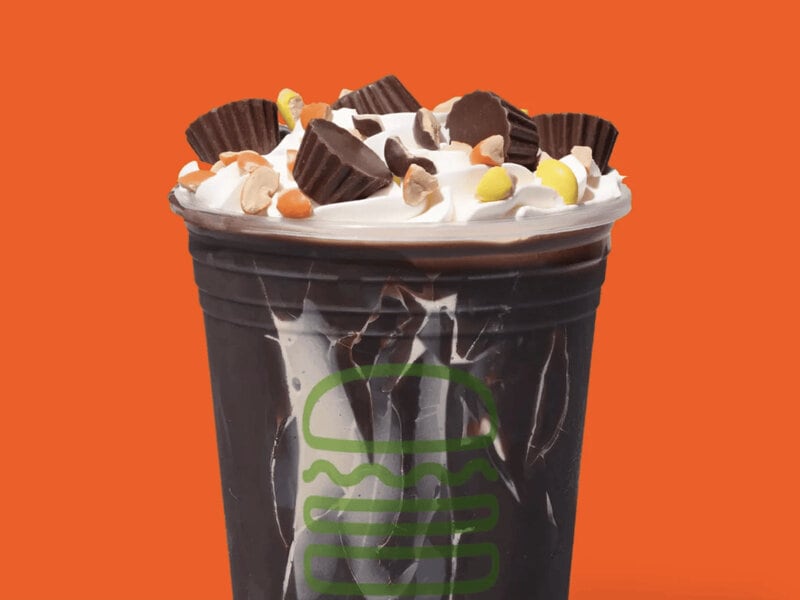
Shake Shack introduced the Reese’s Peanut Butter Cup Shake, a Halloween-themed dessert featuring vanilla frozen custard blended with Reese’s Creamy Peanut Butter and fudge and finished inside a crackable dark chocolate shell. The shake is topped with whipped cream, Mini Reese’s Peanut Butter Cups and chopped Reese’s Pieces.
The chain lists the Reese’s shake at 1,900 calories, a figure the menu pairs with its nutrition guide. For context, Shake Shack’s Vanilla Shake is 680 calories, Chocolate is 750 calories and Cookies & Cream is 850 calories.
The offering delivers a textural payoff as diners crack through the chocolate shell into peanut-butter-fudge custard, making it a clearly indulgent treat for seasonally minded shoppers. It is available nationwide for a limited time.
Image Credit: Shake Shack
Key Themes Behind This Trend
- Extreme Dessert Shakes
- Calorie-dense, texture-rich shakes position indulgence as a premium experience, creating space for limited-edition formats that function as both menu items and social content.
- Crackable Confections
- Interactive dessert elements like chocolate shells add sensory novelty to familiar products, expanding opportunities for brands to differentiate through texture and participation.
- Seasonal Candy Collaborations
- Branded candy partnerships tied to holidays merge nostalgia with urgency, giving foodservice operators a way to convert seasonal excitement into premium purchases.
Where This Applies
- Quick-service Restaurants
- Limited-time dessert collaborations help chains increase visit frequency and basket size by turning familiar beverages into event-driven menu launches.
- Confectionery
- Iconic candy brands can extend relevance beyond packaged goods through co-branded foodservice applications that translate recognizable flavors into new consumption occasions.
- Frozen Desserts
- Premium custard and shake formats are evolving through layered inclusions, toppings and interactive finishes that blur the line between beverage and plated dessert.