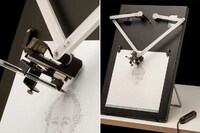
Paul the Robot can probably out-draw most people reading this article. Sure, his work may be messy and scribbly, but that's actually part of his design. Creator Patrick Tresset insists that he put in the design flaw to give the resulting illustrations a much more human quality. Either way, the fact that a robot can recognize human features and draw anything at all is an astonishing feat to me.
How does Paul the Robot work? Simply sit in front of him and then watch the mechanical hand doodle away. If you're not happy with the results, keep in mind that Paul the Robot's current incarnation can't actually see what he's drawing.
Implications - Though consumers are fascinated with technological progress, they are still hesitant to adapt new technologies if they cannot humanly interact with them. By incorporating purposeful design flaws, consumers develop an empathetic bond with creations like Paul the Robot. Corporations looking to introduce new technologies to the public would benefit from incorporating humanlike design qualities into their gadgets.
What Makes This Trend Stand Out
- Design Flaw Integration
- Incorporating purposeful design flaws in technological creations builds an empathetic bond with consumers.
- Humanlike Gadgets
- Developing gadgets with humanlike design qualities enhances consumer acceptance and interaction with new technologies.
- Emotional Bonding
- Purposefully designing technology to create emotional connections increases consumer fascination and adoption.
Sectors Adopting This
- Consumer Electronics
- Incorporating humanlike design elements into consumer electronics can increase market share and demand.
- Artificial Intelligence
- Creating robots that can recognize human features and draw with imperfect human qualities opens up opportunities for AI advancements.
- Product Design
- Integrating purposeful design flaws to evoke emotional responses in products can lead to disruptive innovation in the field of product design.