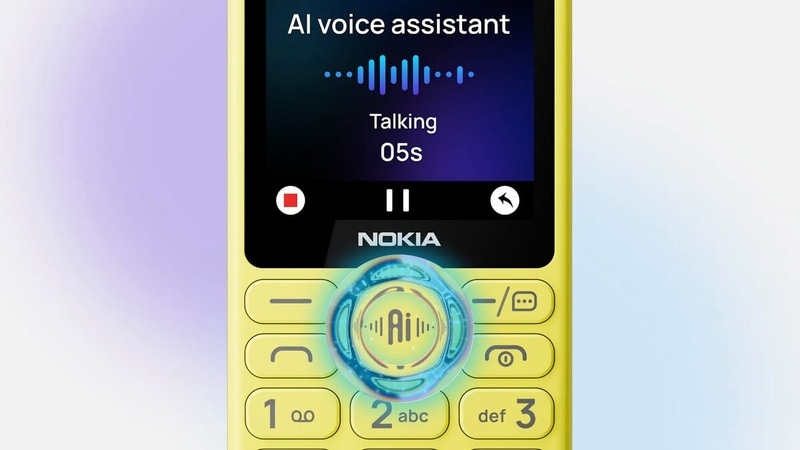
The Nokia 200 4G series updates the familiar brick-phone format with a dedicated AI assistant button positioned at the center of the D-pad. Developed by HMD, the lineup includes the Nokia 200 4G, 210 4G, 215 4G 2nd Edition, and 235 4G 2nd Edition, all of which pair limited internet functionality with voice-controlled assistance powered by Sikey AI. Users can make calls, set alarms, switch on the torch, and ask simple questions without navigating through multiple menus, while access to the AI service remains free for the first 180 days before requiring a low-cost subscription.
The devices retain many classic Nokia features, including T9 keypads, 3.5mm headphone jacks, microSD card support, and FM radio on most models. Rather than supporting conventional smartphone apps, they rely on a basic browser and include Xpress Chat for video calls, group messaging, voice notes, photos, and emojis.
Image Credit: HMD
Key Themes Behind This Trend
- AI-enabled Feature Phones
- Classic mobile hardware gains renewed relevance as lightweight AI assistants simplify everyday tasks for users who do not need full smartphone ecosystems.
- Voice-first Utility Interfaces
- Dedicated voice controls create space for low-literacy, low-bandwidth, and menu-free interactions across affordable consumer electronics.
- Subscription-based Basic Services
- Low-cost AI access after a trial period introduces recurring revenue models into traditionally one-time-purchase mobile devices.
Where This Applies
- Mobile Devices
- Feature phone makers can differentiate durable, low-cost handsets by embedding practical AI functions without adopting app-heavy smartphone designs.
- Telecommunications
- Carriers serving value-conscious markets may benefit from simple connected devices that encourage voice, messaging, and lightweight data usage.
- Assistive Technology
- Voice-guided phone functions highlight broader potential for accessible tools that support seniors, first-time users, and digitally excluded communities.