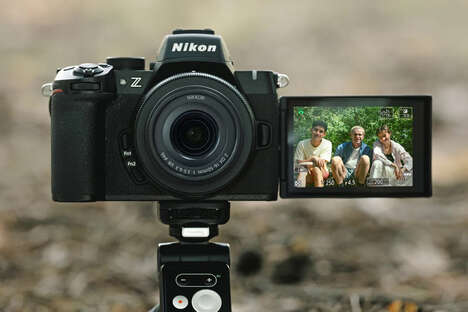
The Nikon D550, unveiled at CES 2015, is the first Nikon DSLR to feature touchscreen capability.
This camera is powered by a 24.2-megapixel APS-C CMOS sensor designed without any optical low-pass filter, enabling it to produce sharper images. It is also equipped with an Expeed 4 image processing engine that helps to produce quality images in a wide variety of lighting conditions and situations. The camera has an ISO range of 100 to 25600 and a pretty decent maximum burst rate of 5 frames per second.
The touchscreen is clearly the highlight feature however; this 3.2-inch LCD touchscreen can be used to navigate camera settings with ease.
The Nikon D550 will be available in February in red or black.
What Makes This Trend Stand Out
- Touchscreen DSLR Cameras
- The addition of touchscreen capability to DSLR cameras provides a more intuitive user experience and opens up opportunities for innovative camera controls and features.
- 24.2-megapixel APS-C CMOS Sensors
- The use of high-resolution CMOS sensors without optical low-pass filters enables DSLR cameras to capture sharper and more detailed images, creating opportunities for clearer and more vibrant photographs.
- Expeed 4 Image Processing Engines
- The integration of advanced image processing engines in DSLR cameras allows for faster and more efficient image processing, creating possibilities for real-time adjustments and enhanced image quality.
Sectors Adopting This
- Camera Manufacturing
- The camera manufacturing industry can explore the development of touchscreen DSLR cameras with innovative features and user-friendly interfaces to attract customers and differentiate from competitors.
- Photography Equipment Retail
- Photography equipment retailers can capitalize on the demand for DSLR cameras with high-resolution sensors and advanced image processing engines by offering a wide range of models and customization options to cater to different customer preferences.
- Software Development
- Software developers can create innovative camera control applications and image processing algorithms that leverage the capabilities of touchscreen DSLR cameras, enhancing user experience and enabling creative possibilities.