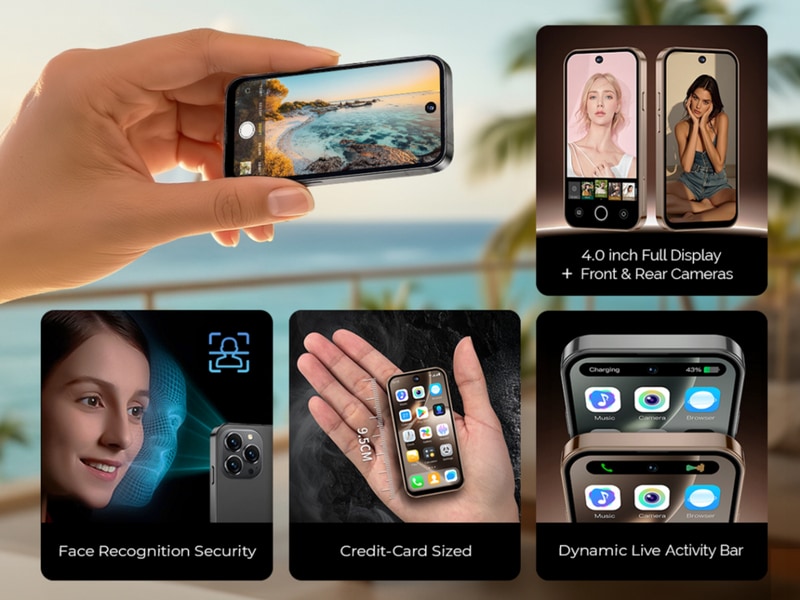
The NanoPhone Pro is a compact smartphone that delivers full 4G connectivity and core mobile functions in a small, pocketable form factor designed for users seeking minimalist hardware. The device is built around a touchscreen interface that supports voice calls, messaging, web browsing, and standard app usage while maintaining a reduced physical footprint compared with typical smartphones.
The hardware includes cellular radios that support 4G networks for data and voice, a rear camera for basic photography, and a front camera for video calls. The operating system is configured to run essential apps and services, and the user interface is optimized for the device’s compact screen. Battery capacity is sized to balance run time with the device’s diminutive volume, aiming to provide a full day of typical use.
Image Credit: NanoPhone
What Makes This Trend Stand Out
- Ultra-compact Smartphones
- Integration of full 4G connectivity and core smartphone functions into pocket-sized hardware enabling a shift toward truly pocketable primary devices.
- Minimalist Mobile Interfaces
- Streamlined touch interfaces and pared-back OS configurations that prioritize essential apps and communications over feature bloat for focused user experiences.
- Battery Efficiency Tradeoffs
- Optimized power-management and component selection that balance a day of typical use with severely constrained physical battery volume, prompting new design paradigms.
Sectors Adopting This
- Consumer Electronics
- Demand for smaller flagship devices that retain key performance features is poised to disrupt product line strategies and manufacturing approaches.
- Telecommunications
- Network operators facing increased adoption of compact 4G handsets may need to rethink service plans and device certification processes to support nontraditional form factors.
- Mobile App Development
- App creators adapting interfaces and performance profiles for tiny screens and limited resources will encounter opportunities to redefine app design standards and modular functionality.