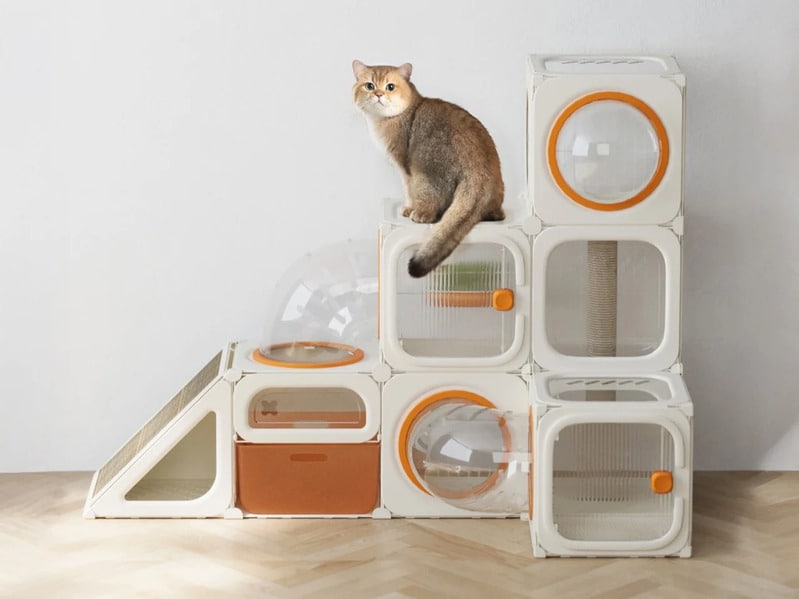
The N Plus Magic House is a modular cat habitat system that reimagines pet furniture as an architectural environment shaped by feline behavior. Rather than a single fixed structure, the system is designed as a set of configurable modules that can be assembled, rearranged, and expanded to suit both the cat’s curiosity and the living space it occupies.
Each module connects through an intuitive system that allows stacking and linking without tools, enabling owners to build vertical and horizontal layouts that support climbing, hiding, resting, and exploration. Individual units function independently while also forming larger structures that encourage movement and territorial comfort. Transparent and open sections allow visibility and airflow, helping cats feel secure while remaining engaged with their surroundings. The system uses durable materials selected for safety and longevity, including rigid plastic panels and reinforced mesh elements.
Image Credit: Taizhou Hake Technology Co., Ltd
Why This Trend Is Growing
- Modular Pet Environments
- Adaptable modules that reconfigure to animal behavior and spatial limits create potential for scalable, evolving habitat ecosystems.
- Behavior-driven Product Design
- Designs informed by species-specific movement and territorial patterns open paths to products that prioritize well-being through spatial affordances.
- Tool-free Assembly Systems
- An intuitive, interlocking connection method that eliminates tools invites rapid reconfiguration and mass-customizable layouts for varied users and settings.
Industries Being Reshaped
- Pet Furniture
- Modular, durable components combined with visibility and airflow considerations suggest new product lines blending architecture-grade materials with animal-centric ergonomics.
- Consumer Modular Systems
- Flexible, stackable unit design points toward a market for cross-category modular components that serve both human living needs and companion-animal enrichment.
- Smart Home and Iot
- Embedding sensors and adaptive controls into configurable habitats could enable responsive environments that track activity patterns and adjust comfort parameters.