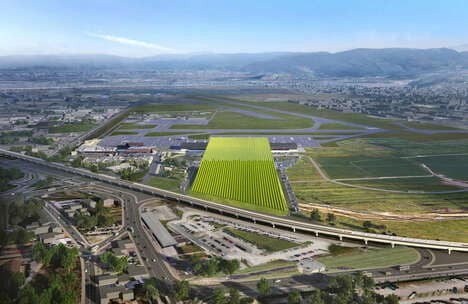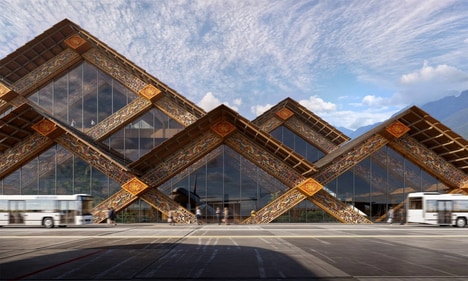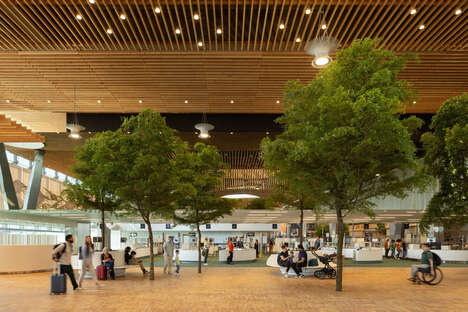

American architecture and design firm SOM has constructed, designed and completed a 40 hectare terminal at the Chhatrapati Shivaji International Airport in India. The structure will hold approximately 40 million passengers a year and will accommodate the region's exponential growth.
The airport terminal was designed with Mumbai's motifs and style in mind. Gathering inspiration from traditional Indian architecture and the fan-like arrangement of a peacock's tail feathers, SOM decided to allude to traditional Indian air pavilions.
The exterior is an expansive span of a cell-like canopy made from concrete that underwent treatment. Inside, the check-in hall is located on the top level of the four-storey complex. Underneath the cell-like canopy are 30 columns that are perforated with colored glazing to allow natural light to enter the space.
What's Driving This Trend
- Indian-inspired Airport Design
- The incorporation of traditional Indian architecture and motifs in airport design can create a unique and culturally-relevant experience for travelers.
- Perforated Architecture
- Incorporating perforated materials in building construction can allow for creative play with natural light and shade, while reducing energy consumption for lighting and cooling.
- Cellular Design
- Designing airports with a cellular structure offers a versatile and adaptable framework which can accommodate changing passenger needs and upgrades.
Who This Affects Most
- Architecture
- Architecture firms can expand their offerings by integrating inspirational and culturally-relevant design elements into public structures like airports.
- Airport Technology
- Airport technology companies can develop and integrate innovative solutions to create efficient and effective perforated structures, and cellular layouts.
- Travel & Tourism Industry
- Incorporation of unique cultural design elements can contribute to creating immersive and authentic travel experiences for tourists, showcasing local heritage and customs.