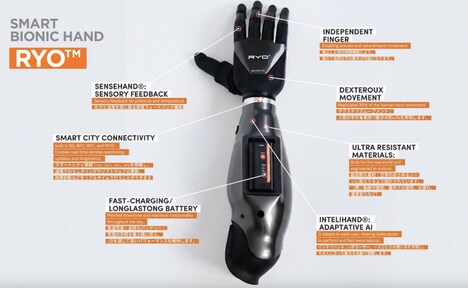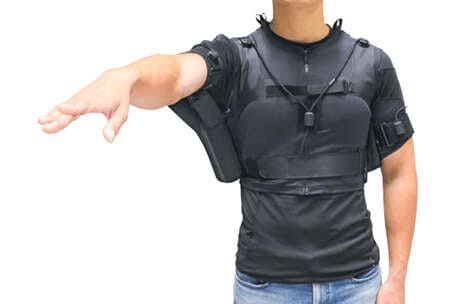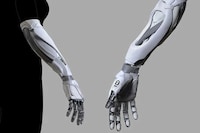


Researchers at the Johns Hopkins University Applied Physics Laboratory have successfully tested a pair of shoulder-attached mind-controlled prosthetic arms. The prosthetic system can be learned quickly, and could have the potential to significantly improve the lives of shoulder-level amputees. This technology could practically change the lives of people like test subject Leslie Baugh, who lost both arms in an electrical accident decades ago.
Before being able to use the mind-controlled prosthetic arms, Baugh was made to undergo a special treated to reassign nerves that once controlled his arms. Pattern recognition software was then used to isolate individual muscles and study the communication between them. The information was then translated into prosthetic movements.
Once fitted, Baugh was able to carry out complex tasks and was even able to control a combination of motions across both arms, a revolutionary development in the field of mind-controlled prosthetics.
Why This Trend Is Growing
- Mind-controlled Prosthetics
- Disruptive innovation opportunity: Develop advanced mind-controlled prosthetics for amputees to significantly improve their quality of life.
- Shoulder-level Amputees
- Disruptive innovation opportunity: Create specialized prosthetic solutions specifically tailored to the needs of shoulder-level amputees.
- Pattern Recognition Software
- Disruptive innovation opportunity: Advance the development of pattern recognition software to enhance the precision and control of mind-controlled prosthetic movements.
Industries Being Reshaped
- Medical Devices
- Disruptive innovation opportunity: Explore the medical device industry to develop and manufacture mind-controlled prosthetics.
- Neuroscience
- Disruptive innovation opportunity: Combine neuroscience and prosthetic technology to further enhance the capabilities of mind-controlled prosthetics.
- Rehabilitation Services
- Disruptive innovation opportunity: Collaborate with rehabilitation service providers to incorporate mind-controlled prosthetics into their treatment plans for amputees.