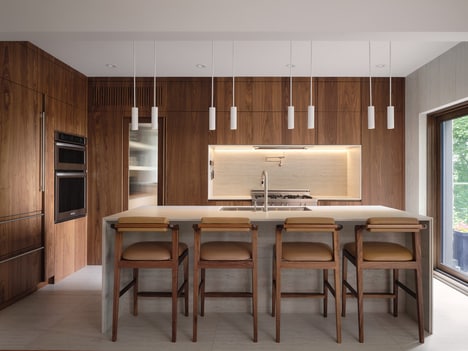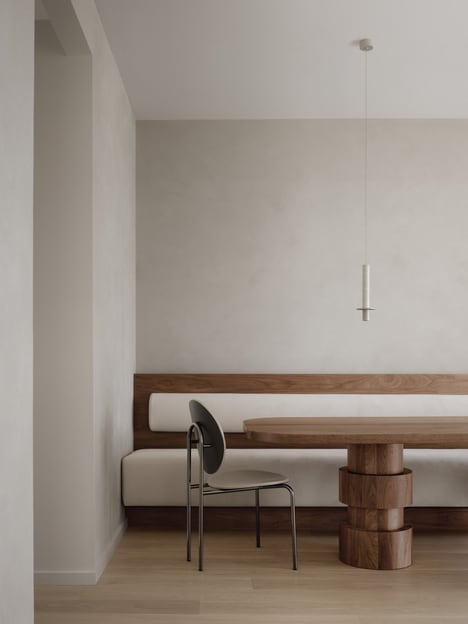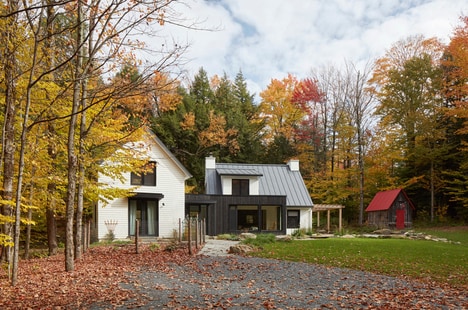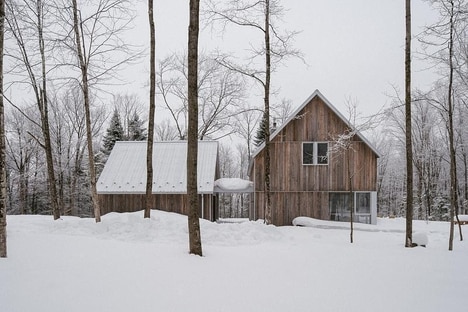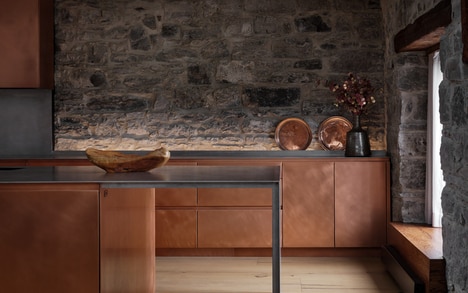
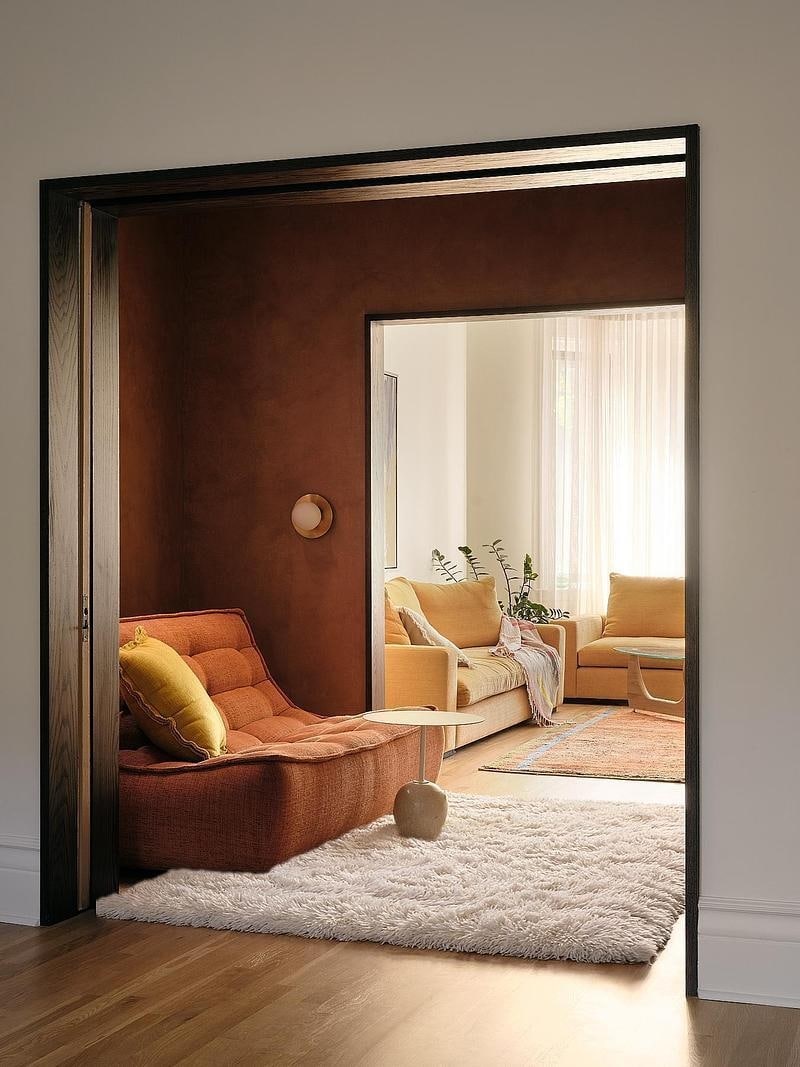
Michael Godmer Studio completed the de l’Épée Residence as a full-scale renovation of a century-old home in Montreal’s Outremont neighborhood. The transformation began as a casual exploratory conversation and transitioned into a yearlong collaborative process that treated the house as a sensitive archive of its owners’ lives.
Michael Godmer Studio's clients for the de l’Épée Residence development were an art therapist and a social programs manager who had lived internationally before returning to Montreal with their two children. The clients were not seeking a stylistic overhaul but rather an architectural language capable of holding the cultural fragments, memories, and spatial experiences they had gathered over years of travel. Rather than impose a predetermined aesthetic, Michael Godmer Studio approached the existing structure as a partner in dialogue, preserving the warm woodwork, central staircase, and generous proportions that defined the house’s heritage while introducing new interventions that soften its character.
Image Credit: Maxime Brouillet
Key Themes Behind This Trend
- Narrative-driven Design
- Integrating personal histories and cultural fragments into spatial programs reveals potential for customizable architecture systems that encode and adapt living narratives over time.
- Adaptive Heritage Preservation
- Treating historic elements as active partners in renovation highlights scalable methods for reversible interventions and material systems that preserve character while supporting modern functions.
- Collaborative Client-centric Process
- Design processes built around extended dialogue with occupants point to service models and digital platforms that mediate ongoing co-creation between firms and households.
Where This Applies
- Residential Architecture
- A focus on memory-rich, non-stylistic interventions suggests market demand for firms offering configurable design frameworks that accommodate diverse cultural and experiential inputs.
- Interior Design Consultancy
- Emphasizing emotional and archival aspects of interiors signals room for consultancies to develop narrative-mapping tools and personalized specification libraries for long-term habitation.
- Cultural Heritage Restoration
- Prioritizing preservation alongside selective modernization indicates pathways for hybrid restoration practices that integrate conservation science with adaptive living requirements.