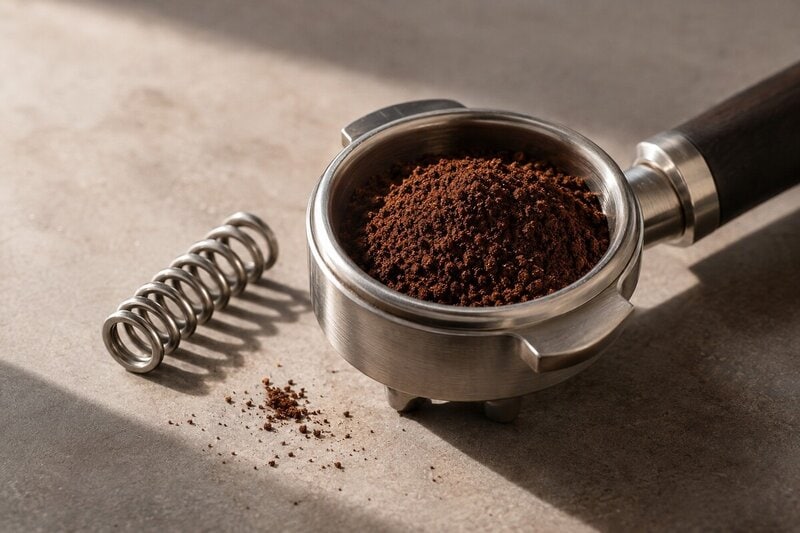
Arpad Bogdan designed the 'Coffee Juicer' as a manual espresso concept for drinkers who find standard machines costly, bulky, or hard to learn. Instead of an electric pump, it builds brewing pressure through a wound spring, while hot water comes from a separate heat source.
Developed at the University of New South Wales, the device pairs a spring-driven piston with a ratchet so the user winds the brewer and the mechanism handles pressure delivery. Its prep basket marks the dose and, the designer says, supports more even tamping. Replaceable silicone parts and a portafilter that combines magnets with a lock keep the concept compact without electronics.
Arpad Bogdan shows how a wound-spring system and a guided prep basket can make manual espresso brewing more approachable as a concept, with rough prototypes informing the design and a working version and performance testing still ahead.
Image Credit: AI-generated
What Makes This Trend Stand Out
- Spring-powered Brewing
- Mechanical pressure systems create openings for compact coffee devices that reduce dependence on electronics while preserving a premium espresso ritual.
- Guided Manual Prep
- Dose-marked baskets and assisted tamping features point to more intuitive home brewing tools that lower the skill barrier for specialty coffee.
- Repairable Coffee Hardware
- Replaceable silicone components and simplified assemblies signal potential for longer-lasting appliances aligned with sustainability-minded consumers.
Sectors Adopting This
- Home Coffee Equipment
- Compact manual espresso concepts expand product possibilities for consumers seeking affordable alternatives to bulky countertop machines.
- Kitchen Appliance Design
- Non-electric brewing mechanisms introduce differentiation for appliance brands focused on portability, simplicity, and reduced energy use.
- Specialty Coffee Retail
- Accessible manual espresso tools create new merchandising potential around education, beans, and compact brewing accessories.