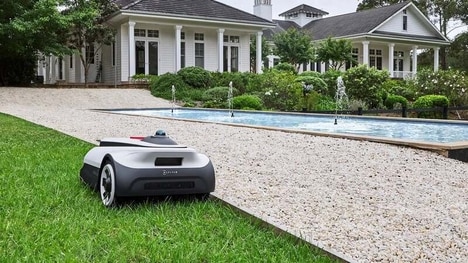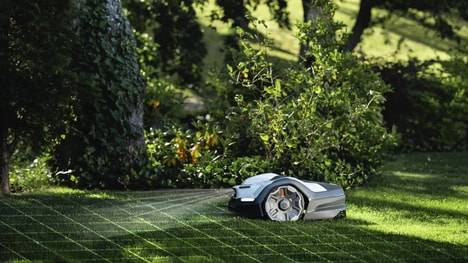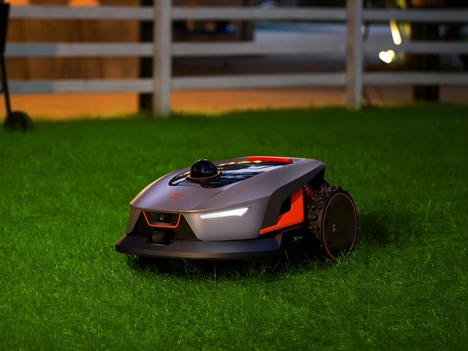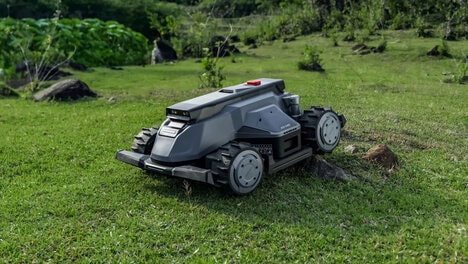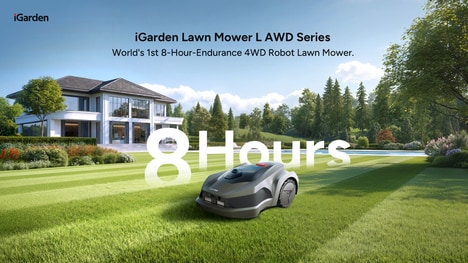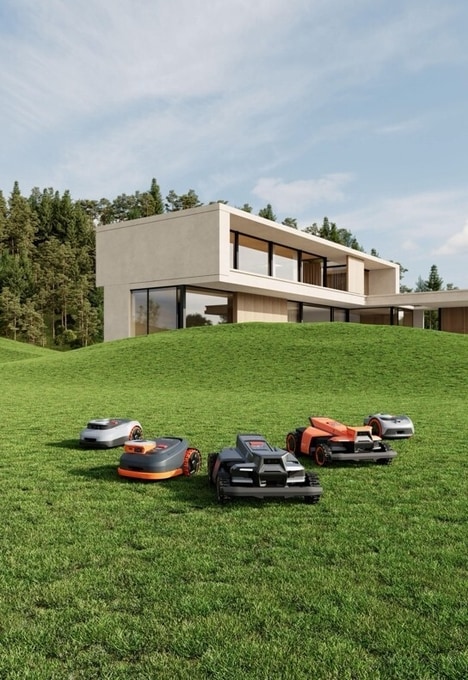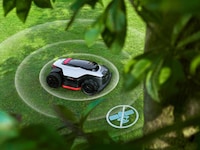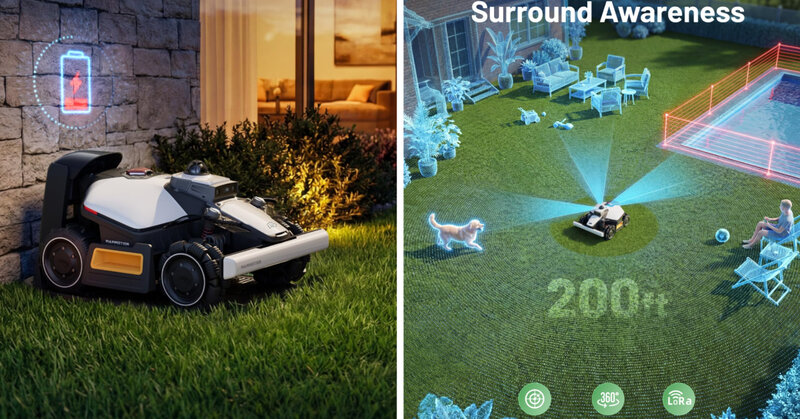
Mammotion's 2026 LUBA Mini 2 AWD 1500H is a robot lawn mower built for complex residential yards. It comes with a garage and a free wash stand, and the package is priced at $1,699.
The mower uses 360-degree LiDAR and a 45-degree field-of-view camera for wider awareness, plus AI-supported recognition and navigation. It also has two cutting discs, with one set for edge work and the main disc offering automatic height adjustment or app-based control. AWD hardware and two 88W motors give it up to 80% slope-climbing ability.
That mix makes it easier to handle uneven lawns, curbs, roots, and thresholds while keeping cuts consistent. DropMow mode is handy for quick jobs because it skips pre-mapping and starts from wherever the mower is placed.
Image Credit: Mammotion
What's Driving This Trend
- Lidar-enabled Yard Robotics
- Residential outdoor automation gains new precision as LiDAR, cameras, and AI navigation allow consumer robots to manage irregular terrain and complex property layouts.
- Boundary-free Lawn Care
- Pre-mapping alternatives and drop-in mowing modes suggest a shift toward more flexible autonomous yard tools that reduce setup friction for homeowners.
- All-terrain Home Automation
- Advanced motors, AWD systems, and slope-handling capabilities expand robotic appliance use beyond flat, controlled environments into challenging residential landscapes.
Who This Affects Most
- Smart Home Technology
- Connected outdoor robots create new value for smart home ecosystems by extending automation from indoor convenience to property maintenance.
- Lawn and Garden Equipment
- AI-guided mowing platforms point to premium equipment categories where software, sensors, and mechanical performance become key differentiators.
- Consumer Robotics
- More capable household robots are emerging as specialized machines that combine autonomous mobility, environmental perception, and app-based personalization.