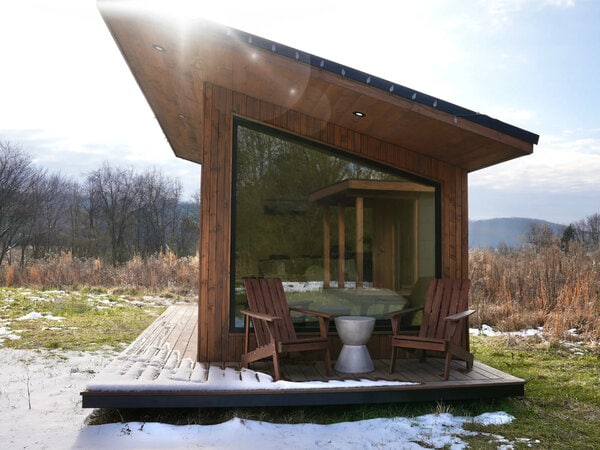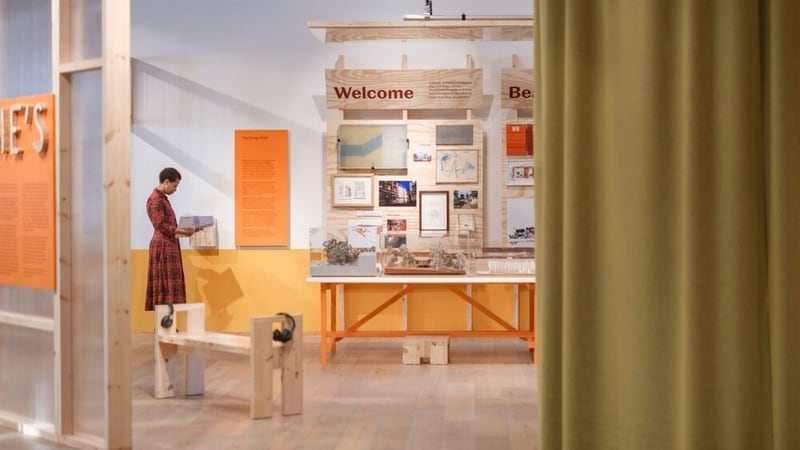
The Maggie’s Architecture That Cares exhibition at V&A Dundee explores how architecture can support people affected by cancer. The exhibition focuses on Maggie’s Centres, a network of facilities that provide free practical and emotional support in environments designed to feel welcoming rather than clinical. Since the first centre opened in Edinburgh in 1996, the organisation has collaborated with leading architects to create buildings that prioritise comfort, light and connection to nature.
The exhibition presents architectural models, drawings and photographs of Maggie’s Centres designed by architects including Zaha Hadid, Frank Gehry and Steven Holl. These buildings demonstrate how elements such as gardens, domestic-scale interiors and carefully considered materials contribute to wellbeing. Through these projects the exhibition shows how architecture can play an active role in healthcare by creating supportive environments for patients, families and carers.
Image Credit: Grant Anderson, V&A Dundee
Why This Trend Is Growing
- Healing Architecture
- Design approaches that prioritize comfort, light and domestic scale create environments where built form directly supports emotional recovery and long-term wellbeing.
- Biophilic Design Integration
- Incorporating gardens, natural materials and visual connections to nature into care settings leads to measurable improvements in stress reduction and patient experience.
- Patient-centric Spatial Design
- Spatial layouts that foreground privacy, social connection and flexible-use rooms reframe clinical facilities as supportive living spaces rather than purely medical institutions.
Industries Being Reshaped
- Healthcare Architecture
- Architectural firms focusing on medical projects can redefine care delivery by embedding therapeutic principles into building form and patient flow strategies.
- Hospital Interior Design
- Interior specialists who select materials, lighting and furnishings with wellbeing metrics in mind influence recovery outcomes and perceived quality of care.
- Therapeutic Landscape Design
- Landscape designers creating accessible gardens and restorative outdoor spaces transform campus environments into integral components of treatment and respite.