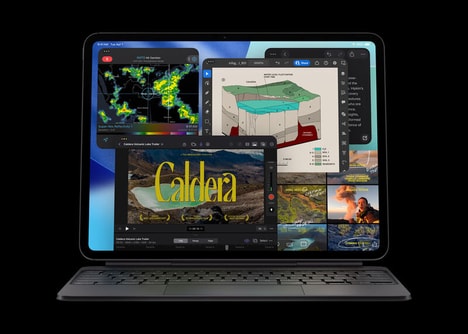

Apple introduced the MacBook Air with its new M5 chip, offering faster CPU and next-generation GPU performance and a Neural Accelerator embedded in every core to support on-device AI and Apple Intelligence. The refreshed Air now starts with 512GB of storage—double the previous base—and uses a new SSD that doubles read/write speeds compared with the last generation. Apple said the M5 configuration ships in 13.6-inch and 15.3-inch Liquid Retina models that keep the same display and up-to-18-hour battery but add up to a 10-core GPU and a 10-core CPU.
The company positioned the M5 Air as significantly faster for AI tasks, claiming up to four times the AI performance of the M4 Air, and offered configurable storage up to 4TB. For consumers, the M5 MacBook Air delivers a clearer upgrade path for users who need local AI workflows and larger base storage, though Apple raised starting prices slightly to reflect the new specs and performance focus.
Image Credit: Apple
What's Driving This Trend
- On-device AI Acceleration
- Local Neural Accelerators embedded in CPU cores are enabling high-performance AI inference on laptops without cloud dependency, opening space for novel privacy-preserving and low-latency applications.
- Higher Base Storage Standards
- Doubling default storage in mainstream laptops is shifting consumer expectations toward larger on-device datasets and more robust offline workflows that reduce reliance on networked storage.
- Performance-focused Mainstream Models
- Bringing multi-core GPU and CPU configurations into thin-and-light consumer lines narrows the gap between professional workstations and ultraportables, altering product-tier dynamics and software optimization priorities.
Who This Affects Most
- Consumer Hardware
- Elevated base specs and integrated AI silicon in everyday laptops are reshaping design roadmaps and component supply chains for OEMs targeting performance-conscious buyers.
- Edge AI Software
- Optimizers, frameworks, and models tailored for on-device neural accelerators are becoming central to delivering responsive AI features in offline and low-bandwidth contexts.
- Data Storage and Security
- Larger local storage capacities combined with sensitive on-device AI processing are driving demand for encrypted, fast SSD solutions and new approaches to end-user data governance.