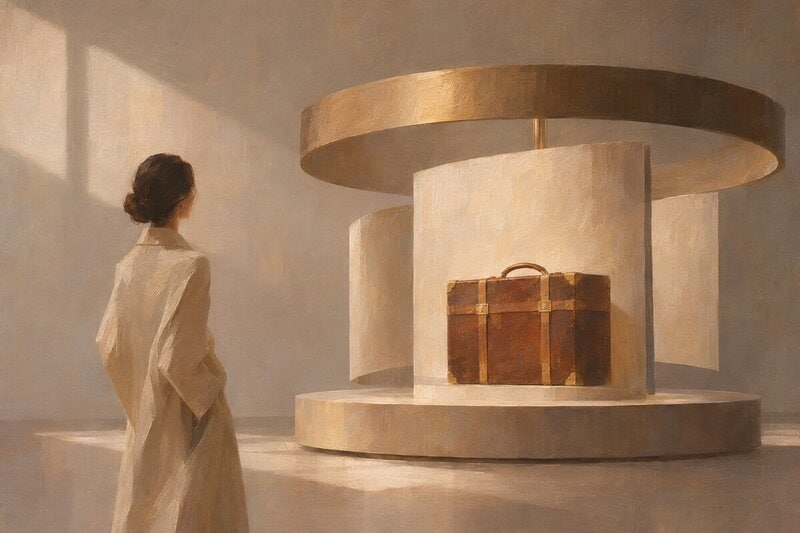
Louis Vuitton reworked LV The Place Bangkok so visitors move through added spaces and a refreshed route anchored by a ‘Trunkscape’ that evolves over time. The entrance installation of 96 Monogram trunks, for the first time, doubles as a recurring canvas for Thai artists, who will periodically remake the surrounding video environment.
A newly added Asnières room brings the brand’s family home and workshop history into the visit, giving guests more context for its trunk-making roots. Live demonstrations in the Workshop room then show that craft in action, so the destination reads more like an exhibition than a conventional luxury store.
Louis Vuitton shows how a Trunkscape remade by Thai artists over time can turn a fixed centerpiece into rotating programming for visitors to the Bangkok destination.
Why This Trend Is Growing
- Rotating Brand Installations
- Luxury flagships gain cultural relevance when permanent architectural features become periodically refreshed canvases for local creative interpretation.
- Heritage Experience Rooms
- Brand history is increasingly packaged as immersive destination content, allowing craftsmanship narratives to deepen visitor engagement beyond product browsing.
- Artist-led Retail Programming
- Retail environments become repeat-visit attractions as collaborations with regional artists introduce evolving visual storytelling and community resonance.
Industries Being Reshaped
- Luxury Retail
- Prestige brands have new potential to differentiate flagship locations by blending commerce, museum-like education, and localized cultural programming.
- Experiential Design
- Spatial design firms can expand into adaptive brand environments where installations, routes, and media layers change over time.
- Cultural Tourism
- Destination marketers benefit from luxury venues that function as cultural stops, merging global brand prestige with local artistic identity.