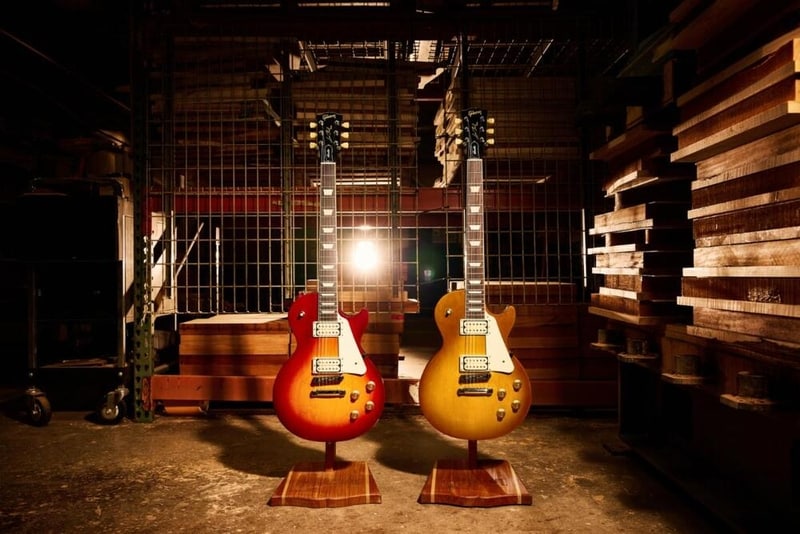
Gibson has introduced the Les Paul Studio Double Trouble — a limited-run electric guitar available in Cherry Sunburst and Dirty Lemon Burst finishes.
The intricate Les Paul Studio Double Trouble features an Ultra Modern weight-relieved mahogany body with a carved plain maple cap, a glued-in mahogany neck with a SlimTaper profile, a bound rosewood fingerboard with 22 medium jumbo frets, and a pair of uncovered Burstbucker Pro pickups with Double Classic White bobbins that include push-pull coil-tapping for single-coil-style tones. The guitar incorporates a Nashville Tune-O-Matic bridge, a lightweight aluminum Stop Bar tailpiece, a Graph Tech nut, independent volume and tone controls, and a three-way selector switch.
Gibson's Les Paul limited-run electric guitars were handcrafted in Nashville, Tennessee.
Image Credit: Gibson
What Makes This Trend Stand Out
- Limited-run Luxury Instruments
- Scarcity-driven limited releases of premium guitars create conditions for boutique, high-margin secondary markets and subscription-style collector services.
- Pickup Modularity and Coil-tapping
- Coil-tapping and exposed pickup designs point to modular electronics ecosystems where interchangeable pickup modules and user-configurable tone profiles become central product differentiators.
- Heritage Craftsmanship with Modern Materials
- The combination of handcrafting in historic factories and contemporary weight-relief materials suggests novel small-batch manufacturing models that blend artisan branding with advanced materials engineering.
Sectors Adopting This
- Musical Instruments Manufacturing
- Premium limited runs and component modularity are reshaping production strategies toward customizable, short-series manufacturing and direct-to-collector distribution.
- Music Retail and Collectibles
- Retailers and auction platforms are positioned to capture enhanced margins through provenance-verified, time-limited instrument drops and curated secondary-market experiences.
- Custom Electronics and Pickup Makers
- Specialized pickup and electronics suppliers can expand into plug-and-play, branded tone modules and firmware-enabled sound profiles for a broader ecosystem of guitar customization.