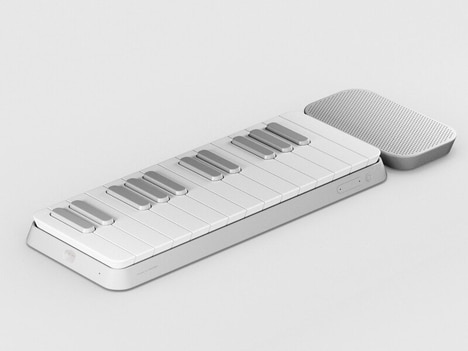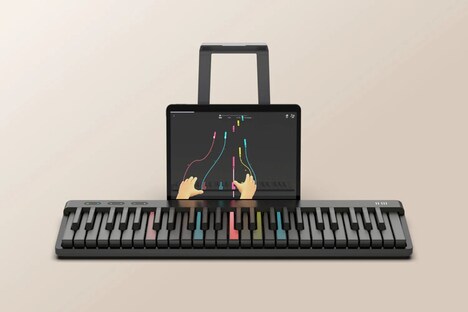
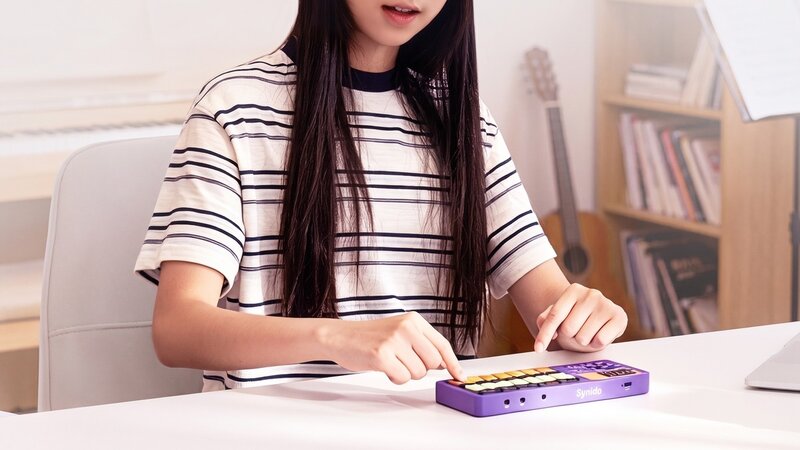
Synido turns a pocket piano into a guided practice tool with the ScalePocket, a 24-key MIDI keyboard that lights the right notes for 132 scales. That helps beginners stay in key while they learn, instead of guessing their way through a song.
The keyboard also offers 12 touch-sensitive voices, including piano and drum-kit sounds, so it can shift from lesson mode to simple sketching. USB-C MIDI support links it to Windows, Mac, iOS and Android, which keeps it useful across phones, tablets and computers.
At 7 ounces and with AAA battery power for about six hours, the ScalePocket fits a mobile practice setup without much bulk. Its $54.99 price also places it as an accessible entry point for people who want scale guidance and a travel-ready controller in one device.
Image Credit: Synido
What Makes This Trend Stand Out
- Illuminated Learning Interfaces
- Light-guided keys create a more intuitive path for beginners, revealing opportunities for hardware that reduces music theory friction through real-time visual instruction.
- Pocket-sized Creative Tools
- Compact, battery-powered MIDI devices support spontaneous practice and sketching, expanding the market for portable creator hardware that fits mobile lifestyles.
- Cross-device Music Practice
- USB-C compatibility across phones, tablets and computers reflects rising demand for flexible music tools that move seamlessly between learning, recording and performance environments.
Sectors Adopting This
- Music Education
- Affordable guided instruments can make foundational skills more accessible, reshaping beginner instruction with tactile, self-paced learning aids.
- Consumer Electronics
- Miniaturized creative devices with embedded learning features suggest new product categories at the intersection of entertainment, education and mobile productivity.
- Music Technology
- Entry-level MIDI controllers with visual guidance point to broader software-hardware ecosystems that blend practice support, composition and device interoperability.