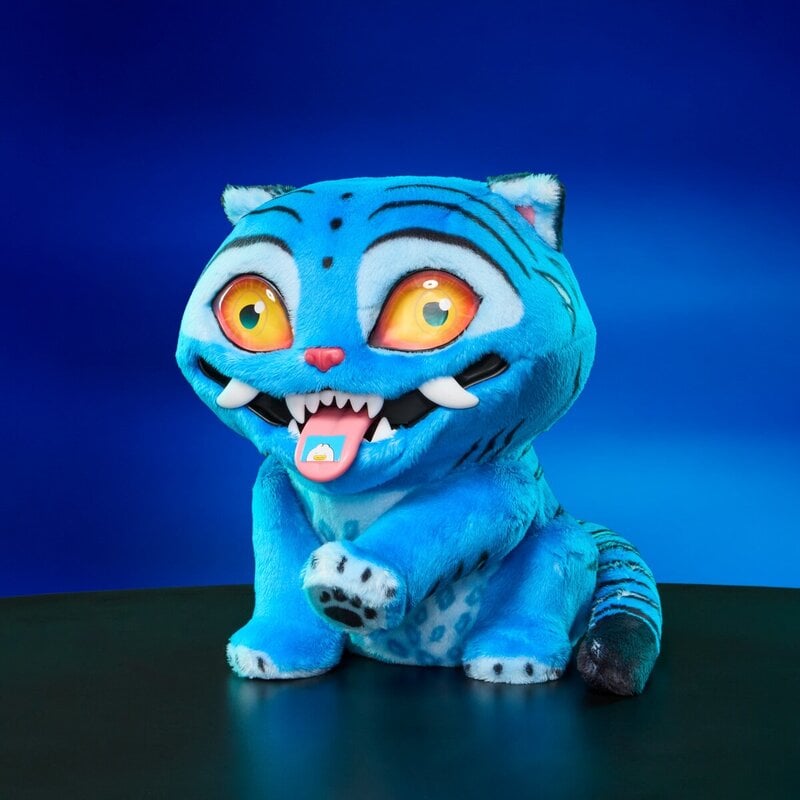
Hasbro is adding Derpy Tiger to its KPop Demon Hunters toy range with a 9-inch interactive plush that responds with more than 40 sounds and reactions. The character item gives fans a way to bring the movie’s spirit animal offscreen as a plush that moves, sounds and reacts.
The plush has holographic eyes, a motorized jaw and a tongue that sticks out when the head is pressed. Its head and front legs can also be posed, which gives the toy more display options between play sessions. Hasbro set the price at $44.99.
Available in November at major online and brick-and-mortar retailers, the plush extends the franchise beyond static character toys into a more animated format. That mix of sound, motion and poseability makes character merchandising feel closer to a small interactive figure than a simple stuffed toy.
Image Credit: Hasbro
What Makes This Trend Stand Out
- Interactive Character Plushes
- Sound, motion and touch-responsive features are turning licensed plush toys into compact entertainment devices that deepen fan attachment beyond passive collecting.
- Animated Collectible Merchandising
- Franchise products with motorized expressions and reactive behaviors create new value tiers for character goods by blending display appeal with repeat play.
- Sensor-driven Toy Engagement
- Embedded reactions and poseable mechanics give toy makers room to personalize fandom experiences through affordable, electronics-enhanced physical products.
Sectors Adopting This
- Toy Manufacturing
- Plush design is shifting toward hybrid formats where electronics, movement and character IP support premium pricing in mass-market retail.
- Entertainment Licensing
- Movie and streaming franchises can extend audience engagement through interactive merchandise that preserves character personality outside the screen.
- Retail Merchandising
- Online and brick-and-mortar channels gain differentiated product stories from tactile, demonstrable toys that combine collectibility with visible tech features.