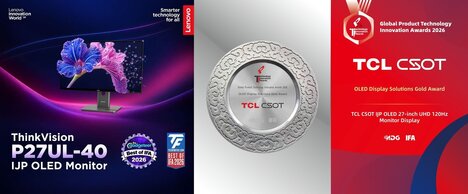
Large-scale printed OLED manufacturing is advancing as TCL CSOT prepares its first 8.6-generation inkjet OLED production facility in Guangzhou, China. The manufacturing line uses precision printing to place organic light-emitting materials directly onto glass surfaces, offering greater material efficiency than conventional vacuum-based production methods while supporting larger display formats.
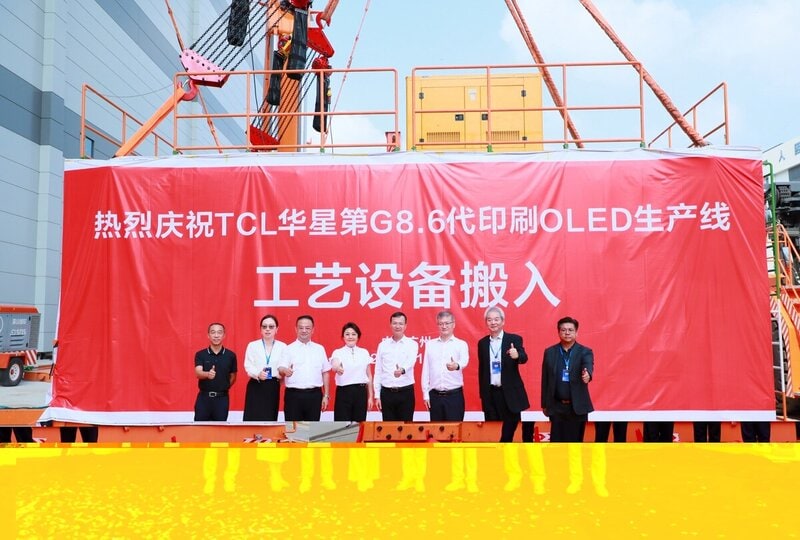
The facility recently entered its equipment installation phase, with commercial production anticipated in the fourth quarter of 2027. Backed by an investment of approximately RMB 29.5 billion, the plant is designed to process 22,500 glass substrates monthly. Initial applications will include screens for tablets, laptops, and monitors, with potential expansion into flexible displays.
For TCL CSOT, this development creates opportunities to increase manufacturing capacity while reducing material waste. The technology could also strengthen production efficiency and support broader adoption of OLED displays across consumer electronics markets.
Image Credit: TCL CSOT
What Makes This Trend Stand Out
- Printed OLED Scaling
- High-generation inkjet OLED lines are redefining display production economics by enabling larger panels with improved material efficiency and lower waste.
- Precision Material Deposition
- Direct placement of organic light-emitting materials creates room for more efficient fabrication models that challenge vacuum-based manufacturing norms.
- Flexible Display Expansion
- Advances in printed OLED infrastructure may accelerate the availability of bendable and lightweight screens across premium consumer electronics.
Sectors Adopting This
- Consumer Electronics
- Tablets, laptops, and monitors stand to benefit from more cost-efficient OLED supply chains that support wider adoption of high-performance displays.
- Display Manufacturing
- Large-scale inkjet production introduces a shift toward substrate-efficient processes that can improve output capacity and reduce material loss.
- Semiconductor Equipment
- Specialized printing and deposition systems gain strategic relevance as manufacturers transition toward next-generation OLED production architectures.