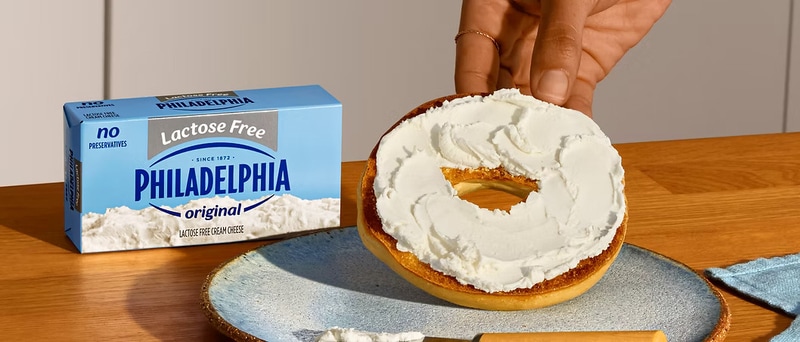
Philadelphia is making its products more accessible to lactose-intolerant customers with the launch of its new lactose-free cream cheese in the U.S.
Designed for consumers who have difficulty digesting lactose, the product uses the lactase enzyme to break down the lactose in the milk and cream to make it easier to digest. The new spread also contains no added preservatives, flavors, or colors, and boasts the same taste and texture as Philadelphia’s original cream cheese. In fact, the new lactose-free cream cheese can be used as a one-to-one replacement for regular cream cheese in recipes like cheesecakes, pastas, dips, and spreads. As Maddy Zingle, VP of Marketing at Philadelphia Cream Cheese, explains, "For too long, many lactose-intolerant consumers have had to miss out on cream cheese and some of the foods they love most. Philadelphia Lactose Free changes that."
Image Credit: Philadelphia
What's Driving This Trend
- Lactose-free Dairy
- Mainstream dairy brands are expanding digestive-friendly product lines, creating space for premium formulations that preserve familiar taste and texture.
- Inclusive Comfort Foods
- Classic indulgent staples are being reformulated for dietary sensitivities, unlocking broader participation in nostalgic and everyday eating occasions.
- Clean-label Substitutes
- Products that combine allergen-conscious functionality with no added preservatives, flavors, or colors reflect growing demand for accessible foods without perceived compromise.
Who This Affects Most
- Dairy Products
- Lactase-treated formats allow established dairy categories to reach consumers who previously relied on avoidance or alternative substitutes.
- Packaged Foods
- Recipe-ready lactose-free ingredients support innovation in convenient spreads, dips, desserts, and meal solutions for sensitivity-aware households.
- Health and Wellness
- Digestive comfort is becoming a mainstream food attribute, connecting everyday grocery products with wellness-driven purchasing behavior.