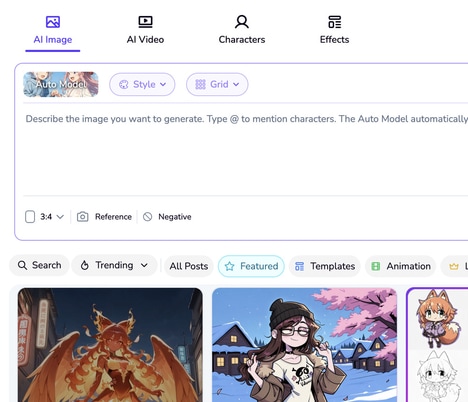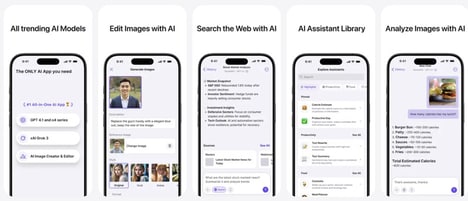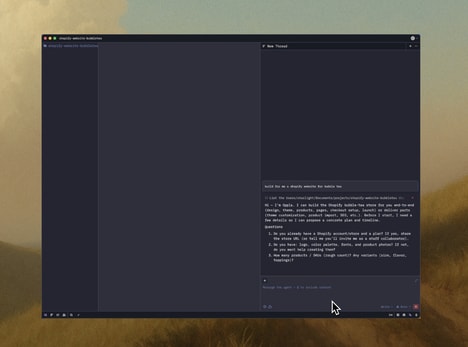
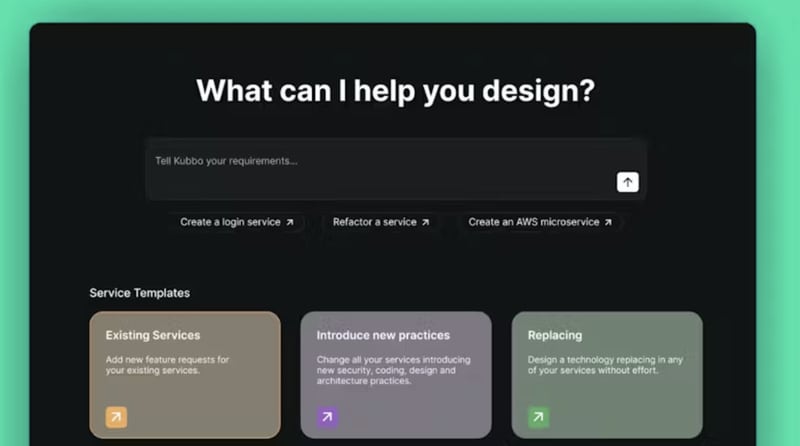
Kubbo AI is a software design platform that integrates artificial intelligence to support and accelerate the product development process. It is positioned as a unified workspace where design tools, contextual information, and AI capabilities are combined into a single environment.
The platform is intended to help users streamline software design workflows by reducing fragmentation across different tools and systems. By incorporating AI-driven assistance, it aims to support faster iteration and decision-making during the design phase. Kubbo AI is typically used by product teams, designers, and developers who are working on digital applications and require an integrated approach to collaboration and design execution. It reflects broader trends in software development tooling where AI is embedded into design environments to improve efficiency, reduce context switching, and support more rapid prototyping and product delivery cycles.
Image Credit: Kubbo AI
Why This Trend Is Growing
- Unified AI-driven Design Workspaces
- A single environment that combines tools, context, and AI could collapse toolchains and redefine how cross-functional teams coordinate design and development.
- Contextual Design Assistance
- AI that surfaces relevant documentation, user data, and code snippets within the design flow has the potential to shift decision-making earlier and reduce costly downstream rework.
- AI-powered Rapid Prototyping
- Generative and predictive models embedded in design platforms enable near-instant artifact creation and iteration, shortening validation cycles and altering product roadmaps.
Industries Being Reshaped
- Software Development Platforms
- Integrated AI capabilities within development tooling can blur the line between design and implementation, enabling tighter feedback loops and more automated code generation.
- Product Design Agencies
- Agencies that adopt AI-augmented workspaces may reconfigure service offerings around faster, data-informed conceptualization and higher-volume experimentation.
- Enterprise Collaboration Tools
- Collaboration suites that embed contextual AI for design workflows could replace disconnected apps by providing unified, decision-aware work environments across large organizations.