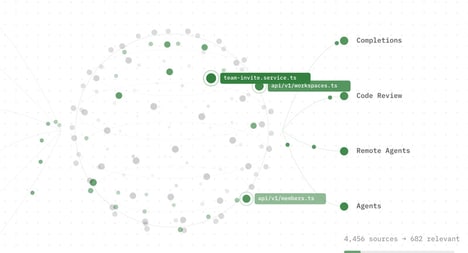
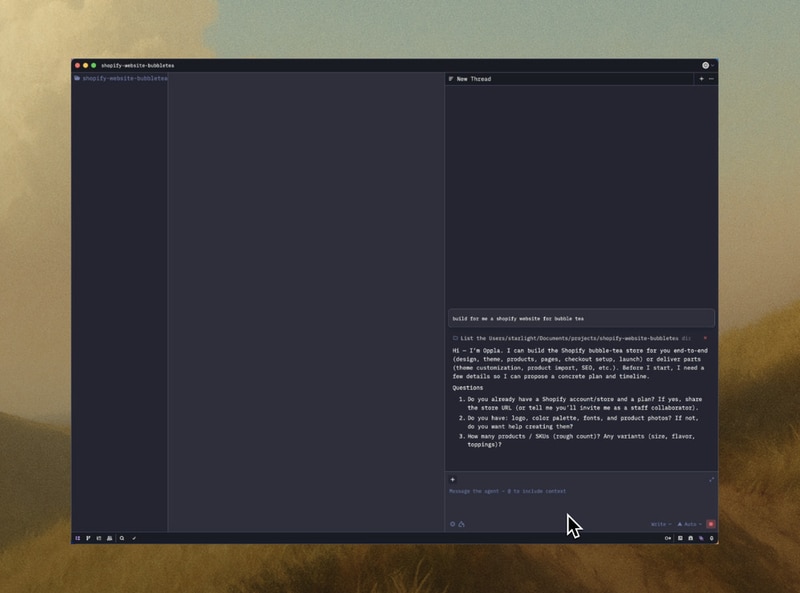
Oppla AI is an integrated development environment designed to support contextual building through AI-assisted workflows. Unlike traditional IDEs that focus primarily on code, it emphasizes maintaining and evolving context across projects, enabling users to manage not only code but also related information, decisions, and dependencies.
This approach allows developers and teams to build with a broader understanding of project scope, reducing fragmentation and improving continuity. By preserving context over time, the platform aims to enhance collaboration, streamline development processes, and support more informed decision-making. For businesses, such tools can help reduce onboarding time, improve productivity, and align technical execution with strategic objectives. Oppla AI reflects a shift toward more holistic development environments where context, not just code, plays a central role in building and scaling digital products.
Image Credit: Oppla AI
Why This Trend Is Growing
- Contextual Development Environments
- A shift toward environments that preserve project context alongside code creates new possibilities for tools that reduce information loss across project lifecycles.
- AI-assisted Knowledge Preservation
- Embedding AI to capture decisions, rationale, and dependencies offers opportunities to transform onboarding and long-term maintainability of complex systems.
- Collaborative Decision-integrated Workflows
- Integrating decision records and dependency mapping into development workflows enables platforms that align technical execution with strategic business objectives.
Industries Being Reshaped
- Software Development Platforms
- Platforms that move beyond code editing toward holistic project context management can differentiate by reducing fragmentation and improving team continuity.
- Enterprise Knowledge Management
- Systems that capture evolving technical context and rationale create potential to replace fragmented documentation with living, queryable knowledge bases.
- Devops and IT Operations
- Operations tooling that preserves configuration context and decision histories can enable more reliable incident response and smoother cross-team handoffs.