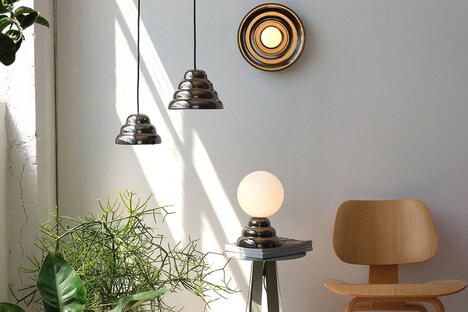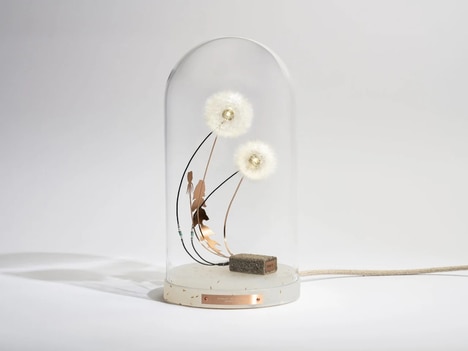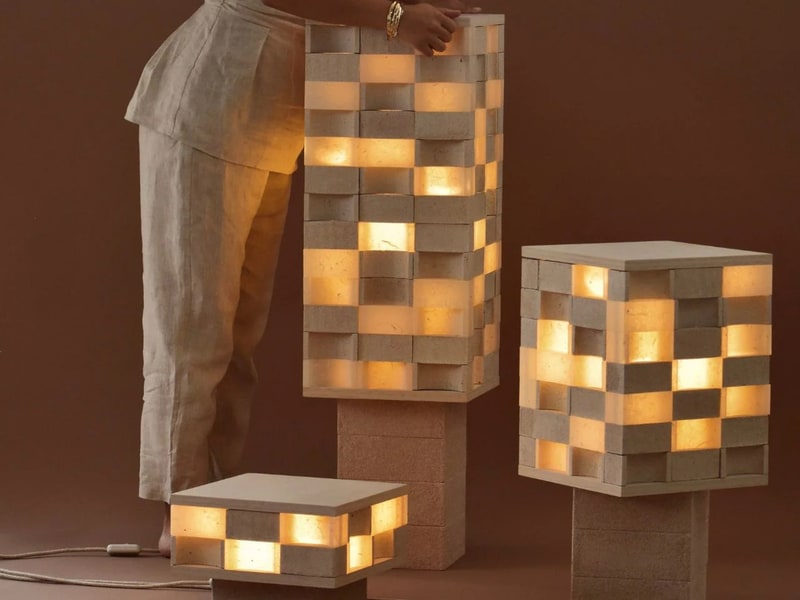
Mod-u is a modular lighting design by Melbourne-based furniture designer Joanne Odisho. It is developed from discarded eggshells collected from local cafes, the lamp uses a composite material made by combining powdered eggshells with a biodegradable biopolymer. The mixture is poured into molds and left to cure naturally, producing durable blocks with a stone-like texture and the natural color of the original shells. First developed during Odisho's studies at RMIT, the project emerged from research into food-waste-based materials and sustainable furniture production.
The lamp consists of individual block-like components that can be stacked, rotated, and rearranged into different configurations. This modular system allows the design to function as a table lamp, floor lamp, or sculptural lighting piece depending on the arrangement.
Image Credit: Joanne Odisho
What's Driving This Trend
- Food-waste Composites
- Discarded organic materials are becoming viable inputs for durable design components, opening new value streams around localized waste recovery and low-impact manufacturing.
- Modular Home Objects
- Reconfigurable products are reshaping interiors by allowing a single object to shift between functional, decorative, and spatial roles over time.
- Biodegradable Material Aesthetics
- Natural textures, colors, and imperfections are creating premium design languages where sustainability is expressed through visible material provenance.
Who This Affects Most
- Lighting
- Sustainable modular fixtures present new market space for lamps that combine circular materials with adaptable forms for homes, hospitality, and retail environments.
- Furniture
- Food-waste-derived composites can broaden furniture production beyond conventional wood, plastic, and stone while supporting distinctive tactile finishes and lower-carbon design narratives.
- Materials
- Bio-Based composite development is positioned to disrupt supply chains by turning local byproducts into scalable alternatives for architectural, product, and interior applications.