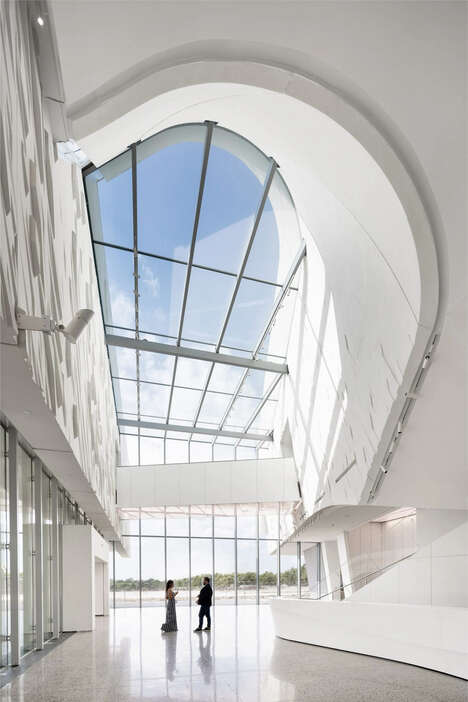
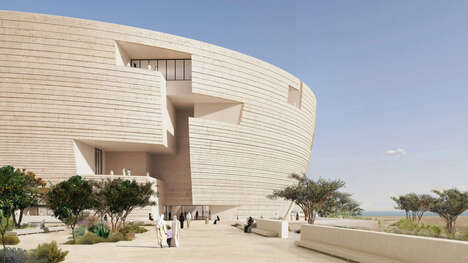
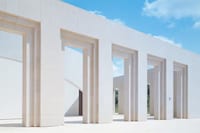
World famous architect Zaha Hadid designed The Issam Fares Institute for the American University of Beirut in Lebanon. The building, which provides a forum for debating public policy and international affairs as they pertain to the Arab world, features a cantilevered design over a public courtyard.
Hadid lifted half of the building off the ground, creating a public plaza at its entrance. She explains, "The building emerges from the geometries of intersecting routes as a series of interlocking platforms and spaces for research, engagement and discourse."
The concrete structure features walls depressed with curvaceous, multi-dimensional shapes, which have a double-function as windows. Inside, the lower level of the building accommodates a concave auditorium that seats 100. Meanwhile, the rest of the building contains workshops and research areas separated by glass partitions to retain visibility.
Key Themes Behind This Trend
- Cantilevered Architecture
- Adopting a cantilevered design for buildings in urban environments is a disruptive solution to make use of limited space and create public areas.
- Curvaceous Designs
- Innovative concrete techniques using curvaceous multi-dimensional shapes can be used to create unique and visually striking buildings that both serve a functional purpose and stand out from traditional architectural designs.
- Transparent Partitions
- Using glass partitions instead of opaque materials to separate areas within a building enhances visibility and communication between different departments, ultimately promoting collaboration and creativity.
Where This Applies
- Architecture
- Implementing cantilevered structures, curvaceous designs, and transparent partitions can disrupt the traditional architectural industry by offering unique and innovative solutions to common design challenges.
- Construction
- Adopting cantilevered structures and curvaceous designs require innovative construction methods and materials, opening opportunities for disruption in the construction industry.
- Education and Research
- Designing buildings that promote visibility and interaction through transparent partitions can disrupt the traditional educational and research industries by encouraging collaboration and knowledge-sharing.