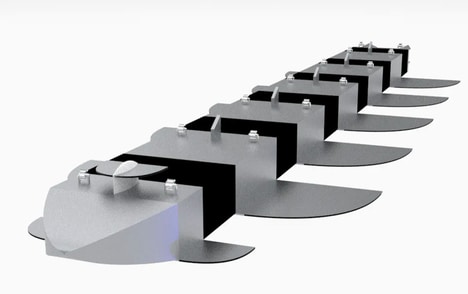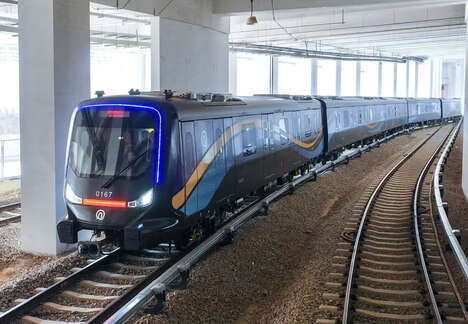
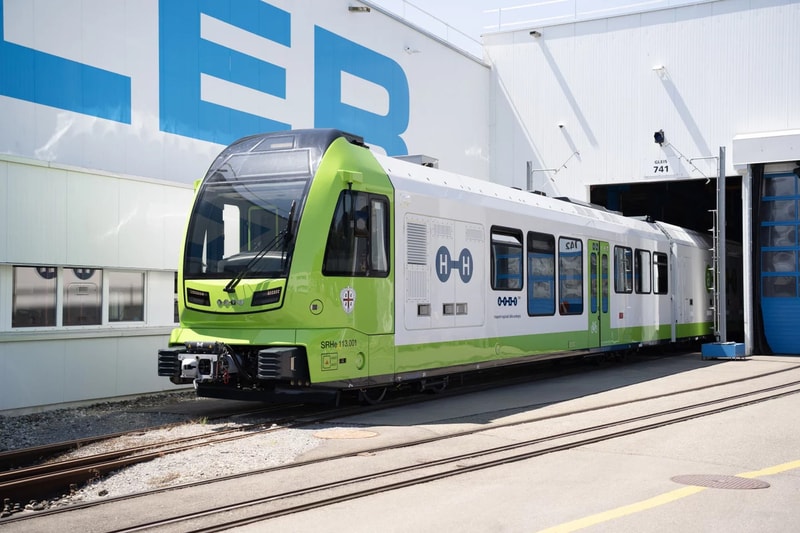
This hydrogen train has been developed through a partnership between Stadler and ARST as a way to help contribute towards the decarbonization of the railway lines in areas with infrastructure constraints. The train takes aim at the narrow-gauge tracks found in Sardinia, Calabria and Sicily in Italy where existing hydrogen-powered locomotives don't work due to space constraints. The train is equipped with a propulsion system that relies entirely on hydrogen fuel cells and keeps them concentrated in the Power Pack car as a way to maximize accessibility and comfort as well as efficiency.
The hydrogen train comes as part of a broader effort supported by the Italian government to decarbonize narrow-gauge rail networks throughout Southern Italy. The entire fleet will need to undergo certification by Italy's national rail safety agency before passenger service begins.
Image Credit: Stadler
What Makes This Trend Stand Out
- Narrow-gauge Hydrogen Rail
- Hydrogen propulsion tailored for compact rail corridors creates new possibilities for decarbonizing legacy transit systems that cannot accommodate standard clean-train designs.
- Modular Fuel Cell Power Packs
- Centralized power pack architectures can reshape train design by improving passenger space, maintenance access, and energy efficiency in constrained railway environments.
- Regional Rail Decarbonization
- Government-backed clean mobility programs are expanding the market for specialized emissions-free fleets across underserved rural and island rail networks.
Sectors Adopting This
- Rail Transportation
- Specialized hydrogen trains introduce a pathway for modernizing non-electrified routes where conventional electrification or standard rolling stock remains technically difficult.
- Hydrogen Energy
- Rail applications in infrastructure-constrained regions strengthen demand for compact fuel cell systems, refueling networks, and resilient green hydrogen supply chains.
- Public Infrastructure
- Decarbonization mandates for regional transit networks highlight opportunities around safety certification, station upgrades, and integrated clean mobility planning.