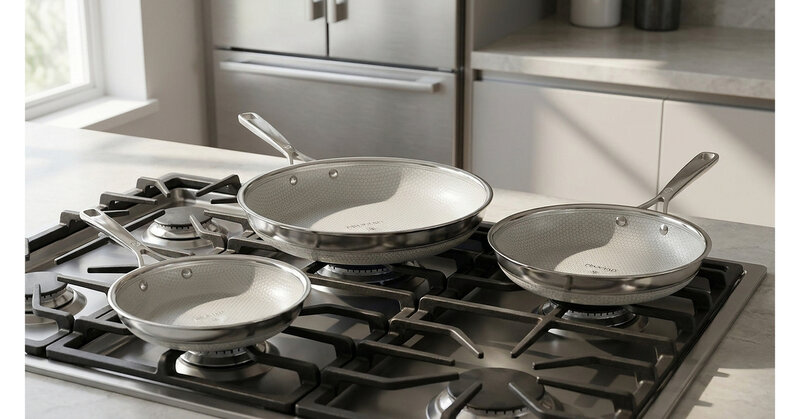
ProClad is advancing titanium hybrid cookware with its Hybrid 2.0 Pan, which combines stainless steel searing performance with a titanium-reinforced ceramic nonstick surface. Its proprietary TitaniumShield system places two ceramic nonstick layers beneath raised stainless steel ridges, protecting the cooking surface from direct utensil contact and wear. A three-ply stainless steel body with a 3 mm aluminum core supports even heating, while the pan is oven safe up to 900°F and compatible with multiple cooktops.
The design addresses consumer demand for cookware that combines durability, easy cleanup and high-heat versatility without requiring separate pans. For ProClad, offering 8-, 10- and 12-inch pans alongside sets and a wok creates opportunities for customers to build coordinated cookware collections. PFAS-free certification and a starting price of $109 can also help position the brand within the premium home-cooking market.
Image Credit: ProClad
Key Themes Behind This Trend
- Hybrid Cookware Materials
- Layered combinations of stainless steel, ceramic, titanium and aluminum create premium cookware formats that merge searing, nonstick performance and long-term durability.
- Pfas-free Premiumization
- Chemical-conscious consumers are reshaping kitchenware value around certified safer coatings, giving brands room to differentiate through health-forward performance claims.
- Collection-based Kitchen Upgrades
- Coordinated pan sizes, sets and specialty formats support higher-value purchasing patterns as home cooks seek unified systems rather than single-purpose tools.
Where This Applies
- Cookware
- Advanced surface engineering and multi-material construction are redefining product expectations around heat tolerance, utensil resistance and easy maintenance.
- Home Goods
- Premium functional design in everyday kitchen products strengthens opportunities for brands to connect durability, aesthetics and wellness-driven purchasing behavior.
- Kitchen Appliances
- Cross-cooktop compatibility and oven-safe versatility blur boundaries between cookware and appliance ecosystems, encouraging more integrated approaches to home cooking.