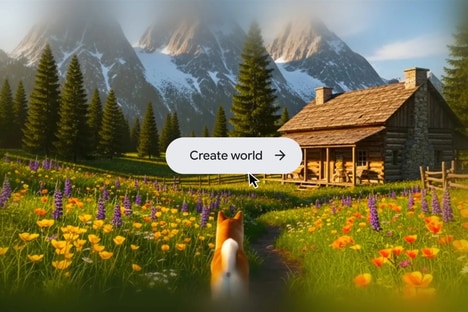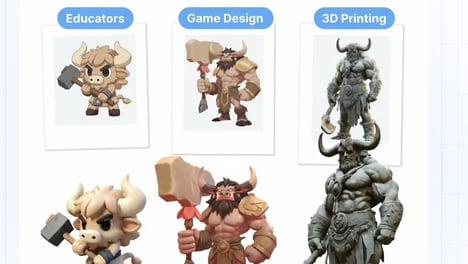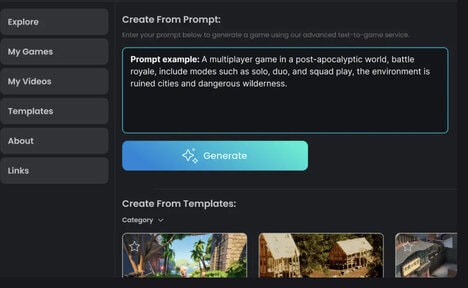
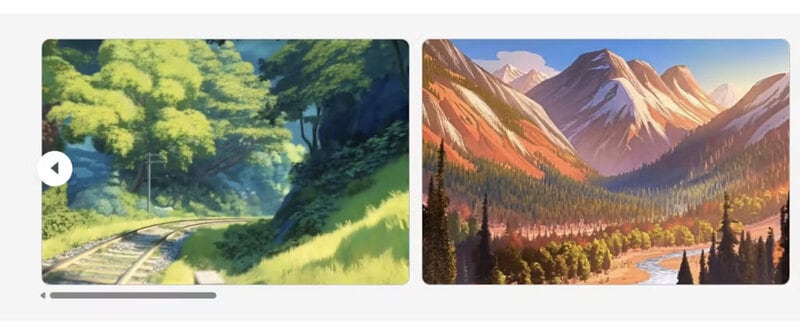
Creating detailed 3D environments can require significant time, technical expertise, and specialised software. HunyuanWorld by Tencent is an open-source AI model designed to generate immersive, explorable 3D worlds from a single text prompt or image. The model can create standard 3D mesh assets that can be used with game engines and existing creative workflows.
This makes it easier for developers and creators to experiment with virtual environments without building every element from scratch. HunyuanWorld opens up new possibilities for generating interactive spaces from simple visual or written ideas. It can be useful for game development, creative projects, and other applications that require custom 3D environments. The ability to start with either text or an image gives creators more flexibility when developing new environments. Its open-source approach also allows developers to explore the technology and integrate it into their own creative projects.
Image Credit: HunyuanWorld
Why This Trend Is Growing
- Prompt-to-world Creation
- Text and image inputs becoming explorable 3D scenes signals new potential for faster prototyping, personalized virtual spaces, and lower barriers to spatial content production.
- Open-source Spatial AI
- Publicly accessible 3D generation models create room for customized creative pipelines, community-led model improvement, and differentiated tools built around niche production needs.
- Mesh-ready AI Assets
- Standard 3D mesh outputs support smoother integration with game engines and design workflows, enabling scalable experimentation across interactive media and immersive environments.
Industries Being Reshaped
- Game Development
- AI-generated environments reduce dependency on manual world-building and introduce new efficiencies for indie studios, rapid level design, and procedural content workflows.
- Virtual Reality
- Immersive platforms gain expanded possibilities for generating tailored spaces from simple concepts, strengthening applications in entertainment, training, collaboration, and experiential design.
- Creative Software
- Design tools incorporating generative 3D capabilities can shift professional workflows toward faster ideation, accessible asset creation, and integrated spatial production ecosystems.