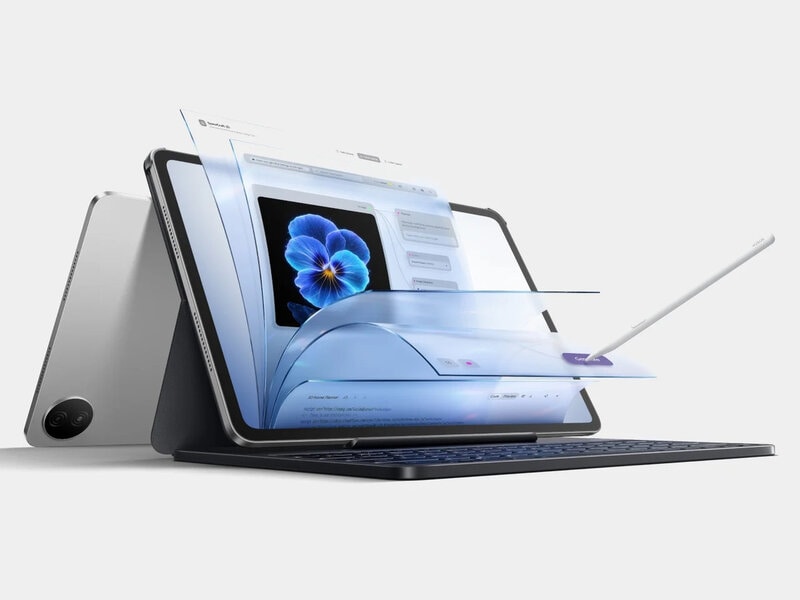
Honor Pad 20 Pro is a 12.1-inch Android tablet available in both a standard model and a Paperlike Edition featuring a micro-textured anti-glare display coating. Both versions share a 3,000 x 1,872 IPS LCD panel with a 165Hz refresh rate, IMAX Enhanced certification, DCI-P3 color coverage and up to 700 nits of brightness. Powered by the Snapdragon 8s Gen 4 processor, the tablet pairs 8GB of RAM with 256GB of storage, while a six-speaker system with DTS Ultra supports media playback and entertainment.
The Paperlike Edition introduces a textured screen surface that increases stylus friction for writing and sketching while reducing reflections during reading and annotation. Both models support the Honor Magic-Pencil 4s stylus and run MagicOS 10.0 based on Android 16, including a desktop-style PC Mode for multitasking with an external keyboard.
Image Credit: Honor
Key Themes Behind This Trend
- Paperlike Displays
- Micro-textured anti-glare screens create differentiation for tablets by blending digital performance with the tactile familiarity of paper-based reading, writing and sketching.
- Stylus-first Tablets
- Enhanced pen friction and responsive refresh rates expand tablet use cases for students, designers and professionals who rely on precise annotation and creative input.
- Desktop-style Android
- PC-style multitasking modes on Android tablets position mobile devices as flexible productivity hubs for hybrid work, entertainment and portable computing.
Where This Applies
- Consumer Electronics
- Premium tablets with specialized display coatings signal room for hardware brands to compete through sensory experience rather than specifications alone.
- Digital Education
- Paperlike Android tablets support more natural note-taking, reading and annotation experiences that align with classroom, remote learning and study workflows.
- Creative Software
- Drawing, design and productivity apps can benefit from devices that make stylus interactions feel more analog while maintaining digital editing and sharing advantages.