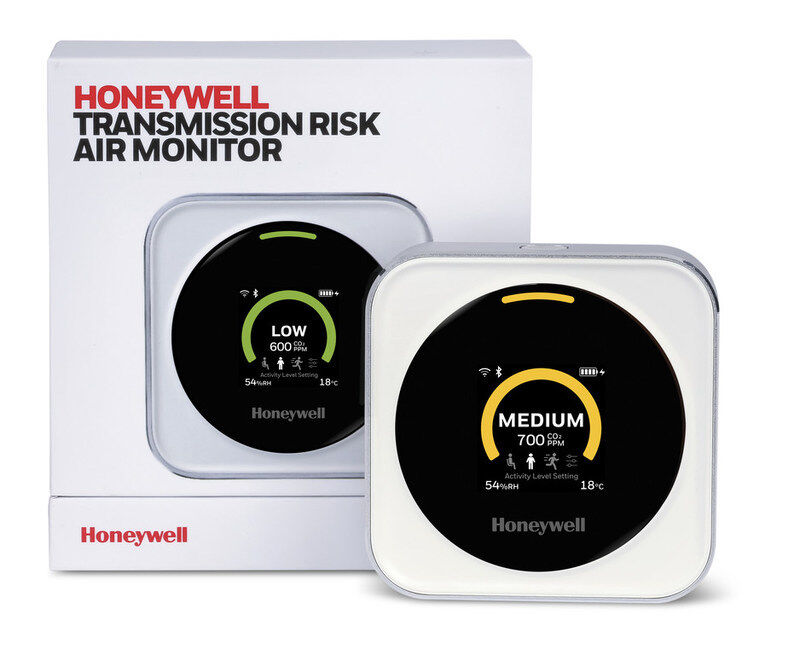
The indoor air quality market is changing as a result of people spending more time indoors and being more aware of risks in public settings, and Honeywell's new air monitor helps to address top concerns. Optimized for use in schools, restaurants and other indoor spaces, the air quality monitor helps people to take steps to proactively improve indoor air quality and decrease the potential risk of transmitting airborne viruses.
The Honeywell Transmission Risk Air Monitor is useful for monitoring CO2 levels and it boasts a proprietary risk alerting system based on user-selected activity levels within a room. Thanks to a proprietary algorithm, the monitor indicates when it might be helpful to increase ventilation with outdoor air and/or improve air filtration.
What Makes This Trend Stand Out
- Indoor Air Quality Monitoring
- Honeywell's Air Monitor addresses the increasing concerns of indoor air quality and creates opportunities for businesses to offer indoor air quality monitoring services.
- CO2 Level Monitoring
- The CO2 level monitoring feature of the air monitor encourages businesses to provide more comprehensive environmental monitoring solutions.
- Risk Alerting System
- The risk alerting system creates opportunities for businesses to innovate and provide customized alert solutions for different indoor settings.
Sectors Adopting This
- Facility Management
- Facility management companies can use the air monitor to provide reliable and comprehensive indoor air quality management services to their clients.
- Education
- The air monitor's optimization for use in schools creates an opportunity for companies to provide specialized air quality management solutions for educational institutions.
- Hospitality
- The air monitor's optimization for use in restaurants and other indoor public spaces creates opportunities for businesses in the hospitality industry to provide enhanced indoor air quality management solutions to their customers.