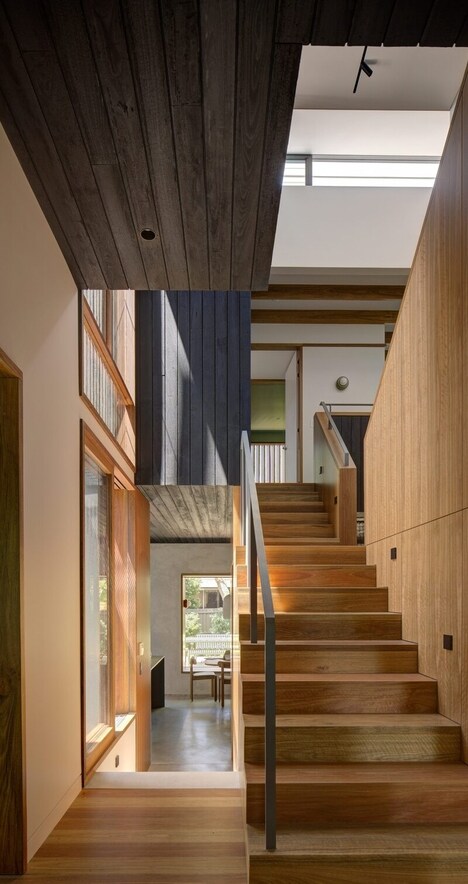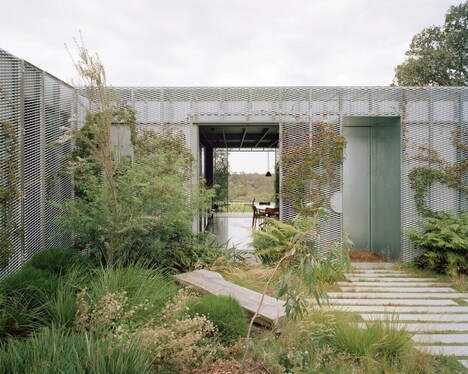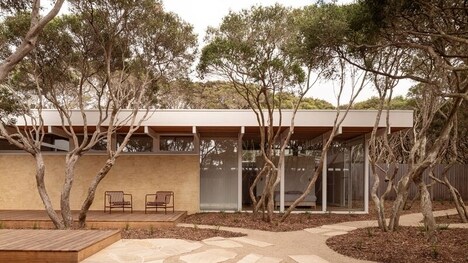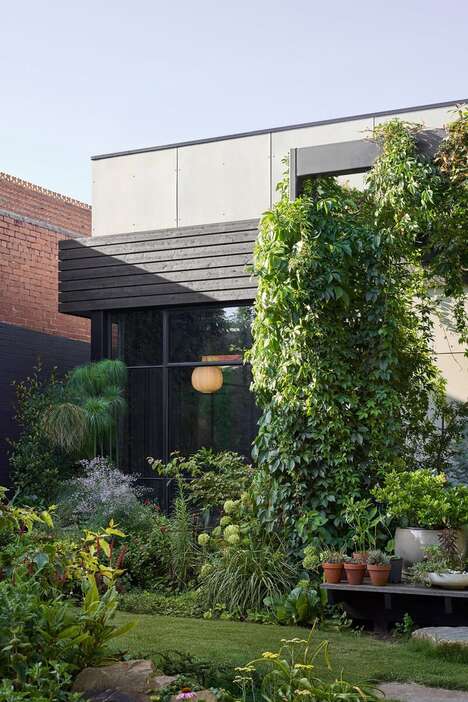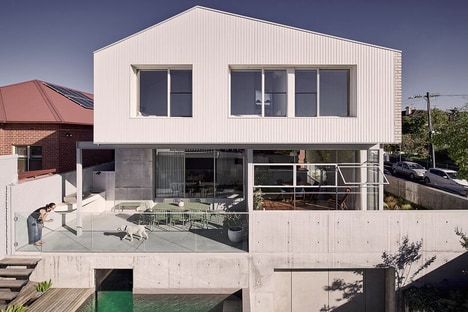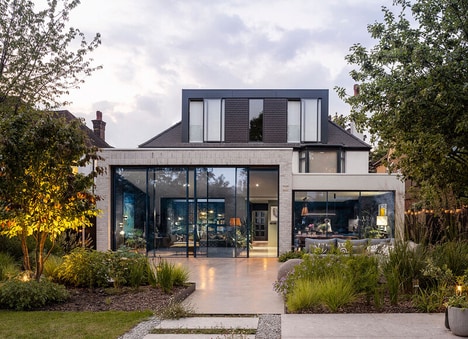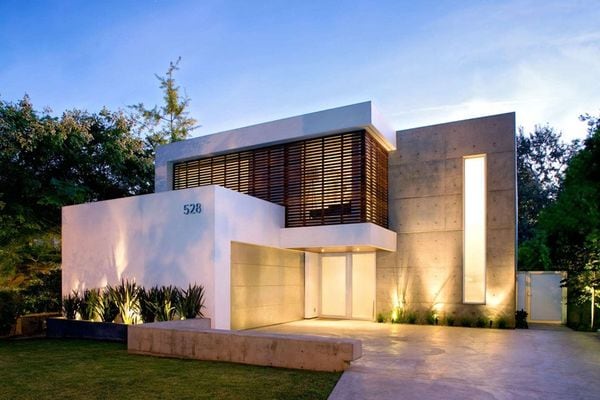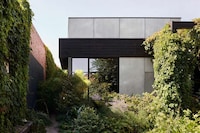
Tim Spicer Architects partnered with Felicity Dessewffy to redesign an existing heritage home, essentially transforming it into a modern residence for a young family. Located in a quiet suburb in Melbourne, Australia, the Chestnut Street House is a two-storey, inward facing residence with acute social capabilities.
Inside, the rake of the living room ceiling allows the space to be opened towards the garden. Double-height glazed windows foster a connection between the room and the outdoor deck, simultaneously allowing natural light to flood the interior of the home. The windows double as a sustainable solar feature.
The facade is composed of copper-toned metal and timber screen, a combination that was chosen to add warmth to the exterior and contrast against the surrounding greenery.
What Makes This Trend Stand Out
- Sustainable Glazed Windows
- Opportunities to develop new, sustainable materials for glazed windows that allow for a connection between indoor and outdoor living.
- Heritage Home Renovations
- Innovations in renovating and updating heritage homes to meet modern standards and design preferences while maintaining their historical significance.
- Indoor-outdoor Living
- Advancements in creating living spaces that seamlessly integrate indoor and outdoor spaces for a more connected living experience.
Sectors Adopting This
- Architecture
- Architects can explore sustainable materials and design options for glazed windows and heritage home renovations.
- Construction
- Builders and contractors can incorporate new sustainable materials and design features into their projects to create indoor-outdoor living spaces.
- Renewable Energy
- Developing sustainable solar features for glazed windows can be a new area of focus for companies in the renewable energy industry.