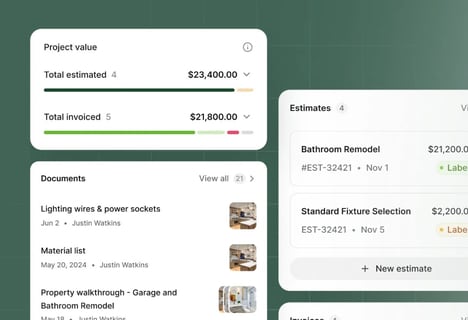
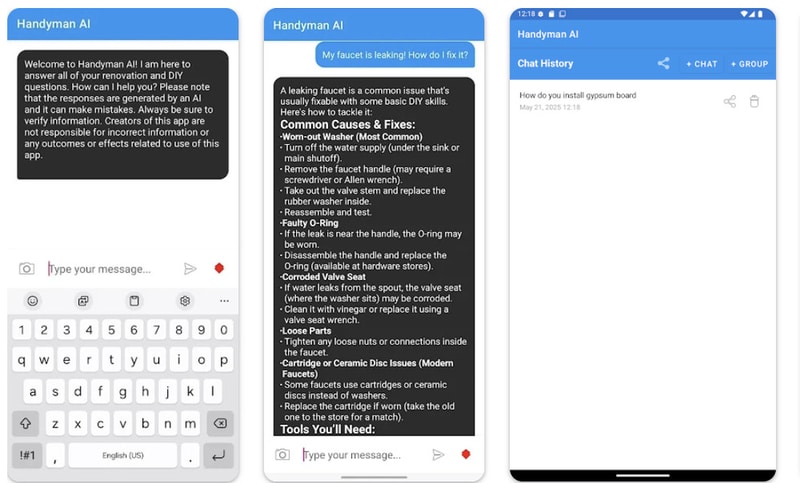
Handyman AI operates within the DIY assistance and home improvement guidance space, focusing on helping users complete repair and creation projects with structured, AI-driven instructions. It provides step-by-step walkthroughs tailored to tasks such as sheetrock repair, resin crafting, and general household fixes, along with lists of required tools and materials.
Users who may lack technical experience but want to complete practical projects independently will use this tool for support. Its value lies in breaking down complex or unfamiliar tasks into manageable sequences that reduce uncertainty during execution. The tool also supports creative applications, extending beyond repairs into craft-based activities. Its effectiveness will depend on the clarity of instructions, adaptability to varied skill levels, and how accurately it can account for real-world variability in materials, environments, and user execution during hands-on work.
Image Credit: Handyman AI
What's Driving This Trend
- Personalized Step-by-step AI
- AI-generated instructions tailored to user skill, tools on hand, and project context create opportunities for customized project plans and individualized material lists.
- Adaptive Skill-level Guidance
- Guidance that dynamically adjusts complexity and pacing based on real-time user performance opens avenues for lowering barriers to entry for novice DIYers.
- Multimodal Visual-interactive Instructions
- Integration of images, video, AR overlays, and sensor feedback with textual steps enables richer, context-aware guidance that accounts for physical variability in materials and environments.
Who This Affects Most
- Home Improvement Retail
- Retailers could see demand for pre-packaged kits and inventory systems aligned to AI-generated project lists, linking digital guidance to physical product sales.
- Online Education and Training
- Micro-credentialing and modular hands-on courses informed by AI task breakdowns present new models for skill verification and lifelong learning in practical trades.
- Consumer Hardware and Tools
- Smart tools and connected sensors that communicate usage data to guidance systems support a shift toward tools that adapt instructions to real-world performance and conditions.