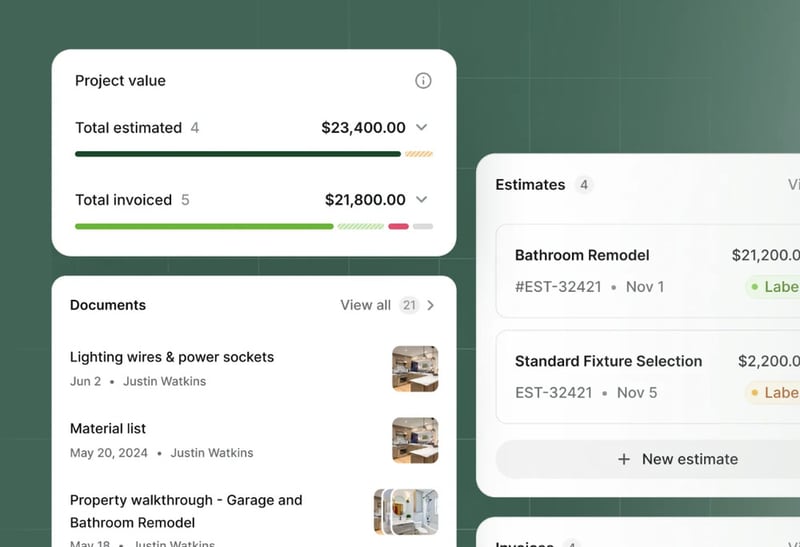
Handoff AI positions itself within the construction tech space by targeting one of the industry’s most time-intensive tasks: project estimation. By leveraging agentic AI, it aims to automate the generation of detailed residential construction quotes, a process traditionally prone to delays and human error.
From a business standpoint, the platform aligns with increasing demand for efficiency among small to mid-sized contractors balancing multiple projects. Its added capabilities—proposal generation and invoice collection—suggest a move toward an integrated workflow solution rather than a single-use tool. While AI adoption in construction remains uneven, tools like Handoff AI reflect a broader shift toward digitization and margin optimization. Its long-term traction will likely depend on accuracy, ease of use, and how well it integrates into existing contractor workflows.
Image Credit: Handoff AI
Key Themes Behind This Trend
- Agentic Automation for Estimating
- By autonomously generating detailed project estimates, agentic systems could reduce manual estimating time and introduce new accuracy benchmarks for bids.
- Integrated Workflow Platforms
- Platforms that combine estimation, proposals, and invoicing are consolidating point tools into unified workflows that can reshape vendor ecosystems and client procurement processes.
- AI-driven Margin Optimization
- Predictive pricing and cost analysis powered by AI have the potential to systematically improve profit margins through real-time adjustment of estimates and allowances.
Where This Applies
- Residential Construction Contractors
- Small to mid-sized builders could experience faster bid cycles and lower labor overhead as automated estimating reduces reliance on specialized estimating staff.
- Construction Tech Saas Providers
- Software vendors serving contractors may be compelled to embed agentic AI capabilities to remain competitive, altering product roadmaps and customer expectations.
- Construction Financial Services
- Lenders and invoice financing firms might see changed risk profiles and new data-driven underwriting models as automated invoicing and proposal histories become standard.