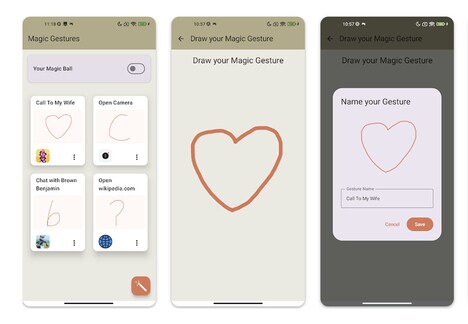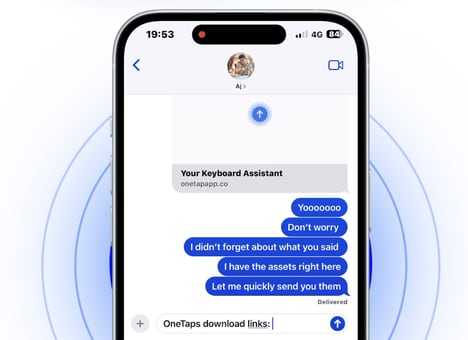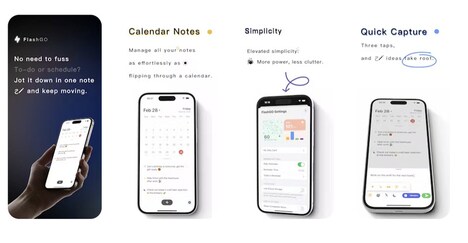
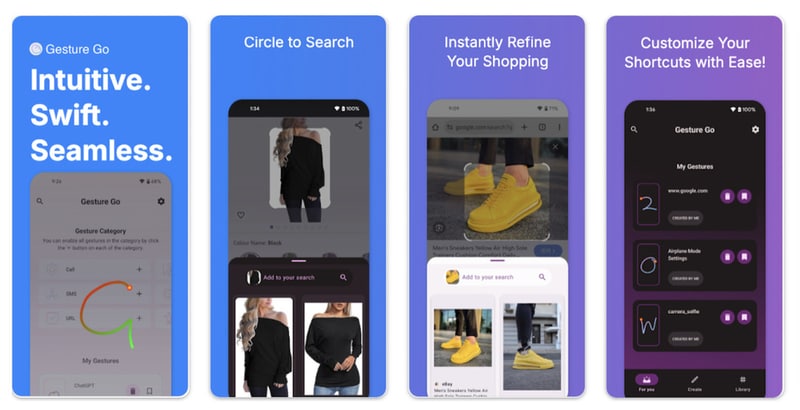
Gesture Go is a mobile application designed to enable gesture-based shortcuts for common smartphone actions. It allows users to assign specific gestures to tasks such as messaging contacts, launching apps, or activating device functions like the camera.
The tool is positioned as an alternative to traditional navigation methods, reducing reliance on menus, taps, and manual searches. By mapping actions to intuitive motions, it aims to streamline interaction with mobile devices and improve efficiency in routine tasks. Gesture Go is typically used by individuals seeking faster access to frequently used functions or customised device workflows. Its approach reflects broader trends in mobile interface design, where gesture recognition and automation are used to reduce friction and enhance usability. The system focuses on simplifying interaction patterns while maintaining flexibility for personalisation and user-defined shortcuts.
Image Credit: Gesture Go
What's Driving This Trend
- Gesture-based Shortcuts
- A shift from menu-driven navigation to gesture-triggered commands that can compress multi-step workflows into single intuitive motions, enabling faster task completion on mobile devices.
- Personalized Mobile Automation
- Users configuring bespoke gesture-to-action mappings that create individualized interaction patterns and allow phones to behave more like adaptive personal assistants.
- Contextual Gesture Recognition
- Systems detecting situational cues such as location, time, or active app state to interpret identical gestures differently and deliver context-aware outcomes.
Who This Affects Most
- Mobile Operating Systems
- Core platform vendors integrating native gesture APIs and low-latency recognition engines that could redefine default navigation paradigms and app interoperability.
- App Development Platforms
- Toolchains and SDKs embedding gesture libraries and templated workflows that would lower the barrier for developers to implement advanced motion-based interactions.
- Accessibility and Assistive Tech
- Assistive solutions leveraging customizable gestures to offer alternative input methods for users with motor or cognitive impairments, potentially broadening device usability.