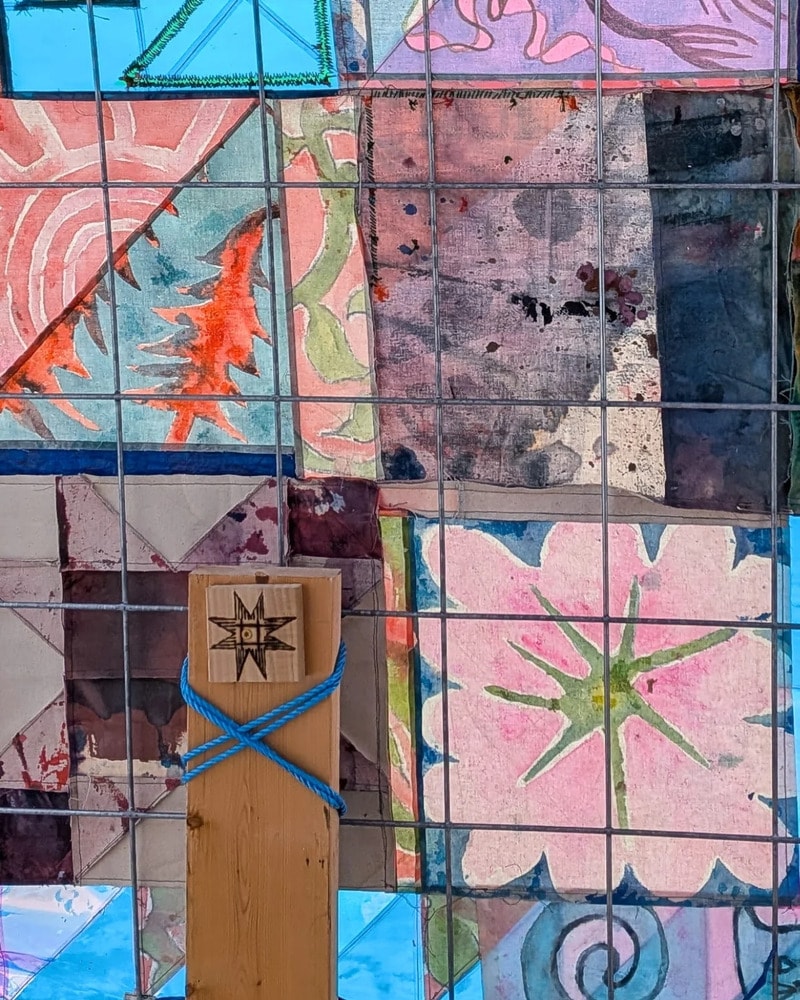
The farm greenhouse quilt is a large-scale installation created by artists Emily Quandahl and Madeline Cochran, who wrapped a functioning agricultural greenhouse in a hand-sewn textile covering. Installed on a rural farm site, the project transforms a utilitarian growing structure into a soft, fabric-covered form while allowing it to continue operating as a greenhouse. The quilt was constructed from individual fabric panels stitched together using traditional quilting techniques, then fitted directly over the greenhouse frame.
The work draws on domestic craft practices and expands them to an architectural scale, emphasizing labor, material reuse, and site specificity. Variations in fabric color, pattern, and texture create a patchwork surface that contrasts with the rigid metal structure beneath it.
Image Credit: Emily Quandahl, Madeline Cochran
What's Driving This Trend
- Textile-integrated Architecture
- Integration of hand-sewn textiles with building structures suggests novel materials and aesthetic approaches that could redefine façade systems and adaptable coverings.
- Craft-to-scale Revival
- The scaling of domestic quilting techniques to architectural proportions indicates potential for artisan-led, low-tech manufacturing methods in niche construction markets.
- Material Upcycling Aesthetics
- Visible reuse of varied fabric panels highlights a demand for design that combines circular-material sourcing with expressive, customizable building skins.
Who This Affects Most
- Agricultural Infrastructure
- Soft, breathable textile enclosures imply opportunities for lightweight, removable coverings that modify microclimates while lowering installation costs.
- Architectural Facade Manufacturing
- Patchwork textile facades point toward hybrid production lines blending traditional handcraft with engineered fastening systems for bespoke exterior solutions.
- Textile Tech and Smart Fabrics
- Functional textiles adapted to structural applications suggest a market for performance-treated fabrics that integrate weather protection, insulation, and sensor capabilities.