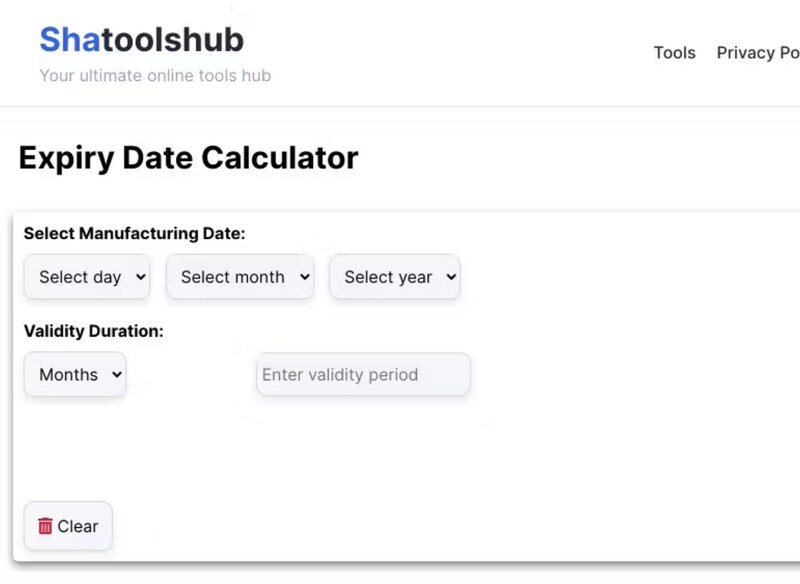
Expiry Date Calculator operates within the product safety and inventory management space, focusing on quickly determining expiration dates based on manufacturing information and validity periods. Users input a production date along with the duration of usability, and the tool instantly returns the corresponding expiry date. It supports a wide range of use cases, including medicines, food items, cosmetics, and other time-sensitive products where accurate shelf life tracking is important.
The interface is built for speed and simplicity, allowing results to be generated in seconds without manual calculations or complex formulas. This makes it useful for both personal checks and professional environments such as retail, healthcare, and storage management. By turning date and duration inputs into immediate expiry outputs, the calculator helps users stay aware of product timelines and maintain better oversight of consumption and storage safety.
Image Credit: Expiry Date Calculator
Why This Trend Is Growing
- Automated Shelf-life Standardization
- Creation of machine-readable expiry metadata standards across manufacturers would enable interoperable tracking and reduce cross-system misinterpretation of product lifespans.
- Real-time Expiry Tracking
- Embedding expiry calculations into IoT-enabled packaging and inventory systems could allow continuous monitoring of remaining usable life under varying storage conditions.
- Consumer-facing Expiry Transparency
- Clear, app-accessible expiry information linked to batch and manufacturing data may shift purchasing and consumption patterns by making product timelines instantly verifiable for end users.
Industries Being Reshaped
- Pharmaceuticals
- High regulatory scrutiny and the critical safety implications of expired drugs present opportunities for integrated expiry-calculation systems that support automated recalls and authenticity verification.
- Food Retail
- Perishable inventory management in supermarkets could be transformed by systems that dynamically price, route, or remove items based on precise, calculated remaining shelf life.
- Cosmetics and Personal Care
- Variable formulations and storage sensitivities in cosmetics create demand for provenance-linked expiry tools that enhance consumer trust and reduce product waste.