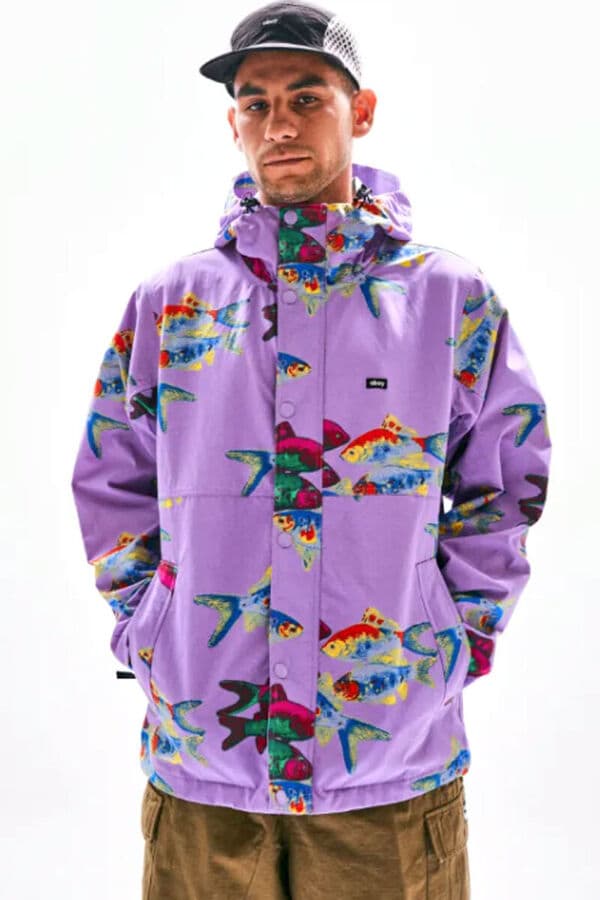


Amsterdam-based textile studio BYBORRE has announced the launch of its 'EDITION11' collection, an offering that works to reinstate the brand's commitment to "create conscious creators."
The new eco-friendly collection utilizes BYBORRE's award-winning CREATE textile creation platform to offer a range of textile designs that were produced using sustainable methods. As a whole, the new collection fits into the brand's initiative to "rewrite the rules of responsible textile creation, digitize the design- and production process and provide Textile-as-a-Service."
Coinciding with the release of EDITION11, BYBORRE Chief Creative Officer and co-founder Borre Akkersdijk penned a thoughtful and poignant letter directed to the entire fashion industry. In it, Akkersdijk challenges the industry to do better, "for the sake of the planet and ourselves"
Image Credit: BYBORRE
Why This Trend Is Growing
- Eco-friendly Textile Creation
- The trend of replacing traditional textile creation methods with eco-friendly methods opens up opportunities to innovate in the fields of material science, sustainability engineering, and corporate social responsibility.
- Digitized Design and Production Process
- Digitizing the design and production process can open new opportunities for innovations across the fashion and textile industry, including in smart textiles and 3D printing.
- Textile-as-a-service
- The trend of providing textile-as-a-service can spur innovations in material science, data analytics, and circular economy business models.
Industries Being Reshaped
- Fashion and Apparel
- The fashion and apparel industry can promote sustainable textile creation by investing in eco-friendly textile production processes, digitizing the design and production process, and offering textile-as-a-service.
- Material Science
- Material science can provide innovative solutions for sustainable textiles, including biodegradable fabrics, carbon-neutral materials, and nanofiber production.
- Circular Economy
- The circular economy industry can collaborate with the fashion and apparel sector to create closed-loop systems for recycling, upcycling and repurposing textiles, and minimizing textile waste.