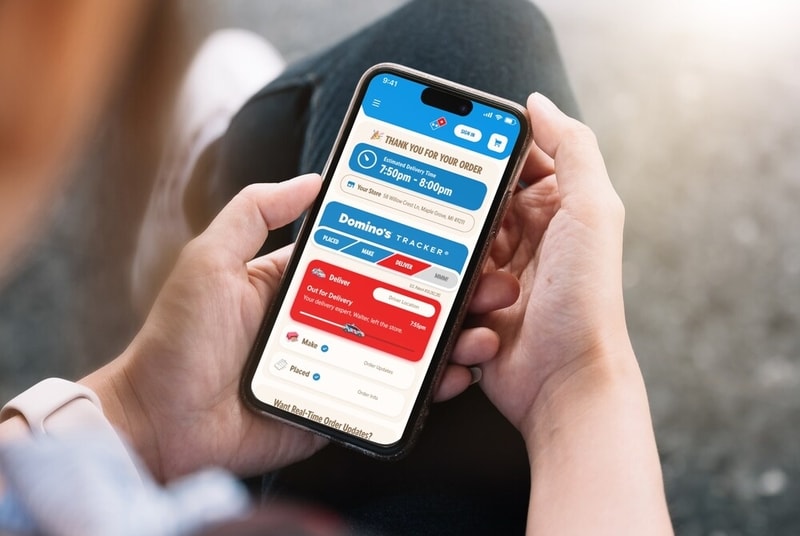
Domino's Pizza has introduced a significant update to its Domino's Tracker, the pioneering order-tracking technology that the company first launched in 2008 and has since monitored more than 2.5 billion orders. The goal of the recent upgrade was to enhance transparency and convenience for customers throughout the ordering and delivery process.
The new Domino's Tracker now integrates a more precise estimated ready time generated by an artificial intelligence engine within DomOS, the company's proprietary operating system. This feature synthesizes real-time input from store employees with machine learning models to refine accuracy. For iPhone users, the integration of Live Activities allows tracking information to appear directly on the device's lock screen, and this eliminates the need to repeatedly open the application to check progress.
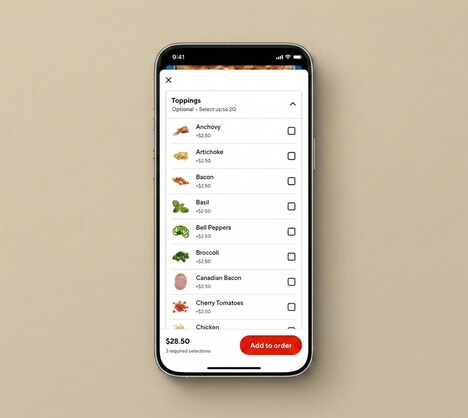
The visual interface of the Domino's Tracker has also been streamlined into simplified stages labeled 'placed,' 'make,' and 'deliver' or 'pick up,' and culminating in an 'mmm!'.
Image Credit: Domino's Pizza
What Makes This Trend Stand Out
- AI-driven Real-time ETA
- Predictive models combining staff input and machine learning produce highly accurate ready times that could redefine customer expectations for delivery punctuality.
- Lock-screen Live Integration
- Direct lock-screen updates reduce friction by surfacing live order status without app launches, reshaping how users consume transactional notifications.
- Simplified Stage-based UX
- Minimalist progress stages condense complex processes into digestible milestones, altering standards for clarity in customer-facing tracking interfaces.
Sectors Adopting This
- Quick-service Restaurants
- Precision tracking and transparent ETAs create new benchmarks for operational transparency that could shift consumer choice toward providers with superior visibility.
- Mobile Operating Systems and Platform Services
- Native support for persistent live activities on device lock screens opens opportunities for deeper platform-level experiences around transactional events.
- Logistics and Last-mile Delivery
- Fusing real-time human input with AI-driven timing forecasts can transform route planning and customer communication expectations in urban delivery networks.