Dive is a cocktail bar designed by Golem in the basement of a building in London's Marylebone district. The venue is organised into two distinct areas, with a brighter bar positioned near the entrance and a more intimate lounge located on the lower level.
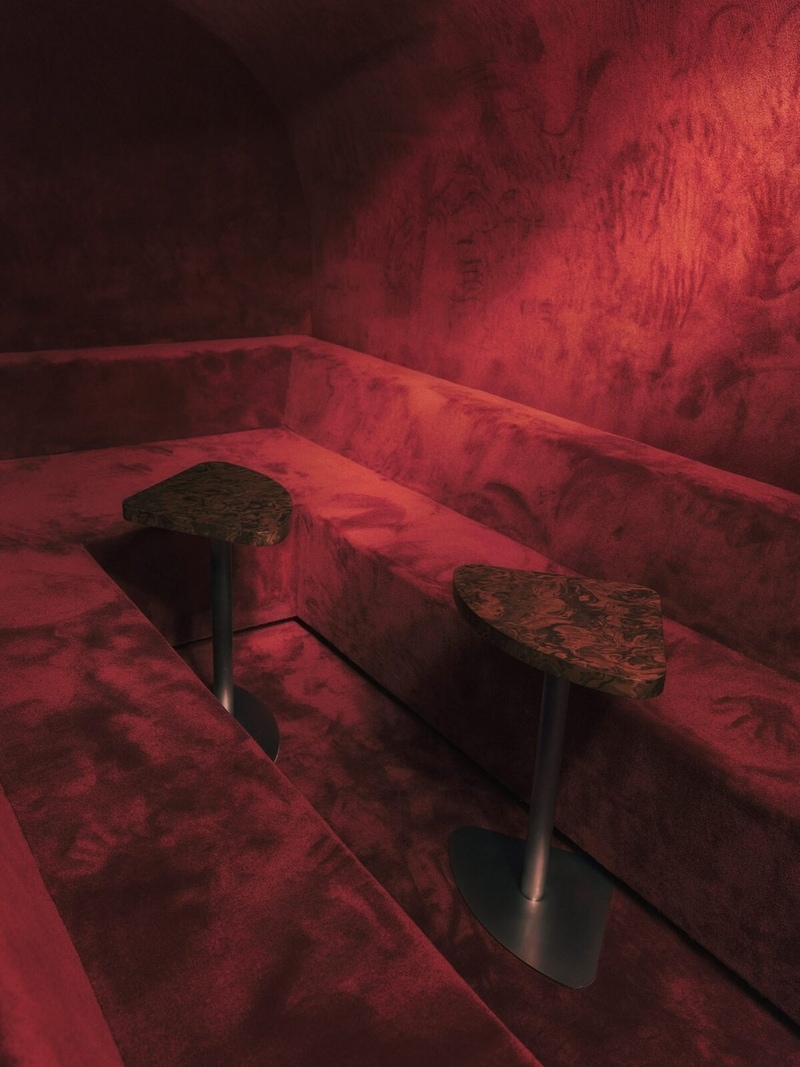
Red velvet covers much of the interior, including walls, floors, seating, and booths, creating a tactile environment intended to evolve through everyday use. Curved forms, reflective surfaces, and convex mirrors define the upper bar area, where glossy finishes introduce contrast to the soft upholstery.
A dark corridor connects the main bar to the lounge, which is arranged around a series of structural arches. Built-in benches and movable cushions allow the seating layouts to be adjusted for different group sizes and social settings. One arch contains a carpet-lined room with a U-shaped configuration designed for lounging and gatherings.
The space also functions as a listening room, featuring a dedicated DJ booth and custom shelving for a vinyl collection. Non-gendered bathrooms sit at the centre of the plan behind a one-way mirror.
Image Credit: Dive
Key Themes Behind This Trend
- Tactile Hospitality Interiors
- Material-rich environments that age through use create differentiated guest experiences for venues seeking deeper sensory identity beyond visual design.
- Hybrid Listening Lounges
- Cocktail bars with DJ booths, vinyl libraries, and intimate acoustic zones signal a shift toward nightlife concepts built around curated sound and social immersion.
- Adaptive Social Seating
- Flexible benches, movable cushions, and modular lounge layouts reveal potential for hospitality spaces that accommodate changing group dynamics throughout the night.
Where This Applies
- Hospitality Design
- Basement venues with layered lighting, curved forms, and immersive finishes expand the role of interior design as a core driver of destination value.
- Nightlife Entertainment
- Music-centered bar formats blend drinking, lounging, and listening into compact cultural hubs that compete with traditional clubs and restaurants.
- Commercial Real Estate
- Underused below-grade spaces gain new relevance when transformed into atmospheric, multi-zone venues with strong experiential appeal.