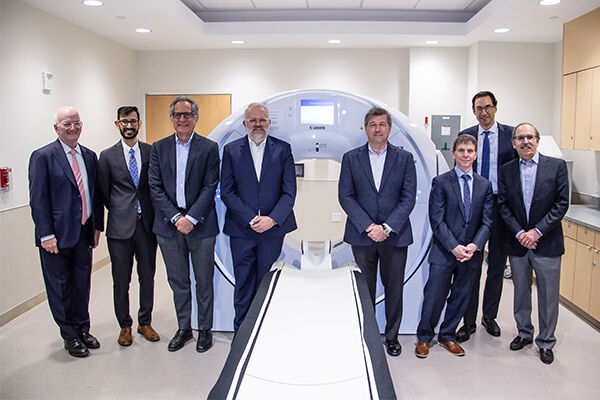
Canon has partnered with Penn Medicine to advance the application of its photon-counting CT (PCCT) technology, a next-generation diagnostic imaging system. This collaboration follows the installation of Canon's fourth PCCT system at the Hospital of the University of Pennsylvania. The research aims to refine the technology and expand its use in specialized areas like chest, cardiac, and musculoskeletal imaging. Through this partnership, Canon and Penn Medicine aim to improve image quality, enhance diagnostic accuracy, and reduce radiation exposure for patients.
The core advantage of PCCT lies in its ability to capture energy data from individual X-ray photons. This allows the diagnostic imaging system to offer superior resolution compared to traditional CT scans. The technology also allows for better differentiation between different tissue types.
Image Credit: Canon
What's Driving This Trend
- Advanced Photon-counting CT
- The application of PCCT technology offers significantly higher resolution imaging compared to traditional CT scans, enabling more precise diagnostics.
- Specialized Medical Imaging
- Focused research on using PCCT for chest, cardiac, and musculoskeletal imaging highlights an emerging trend toward specialized diagnostic tools.
- Radiation Reduction Techniques
- Canon's efforts to decrease patient radiation exposure through advanced imaging technology represent a growing trend in medical safety innovations.
Who This Affects Most
- Medical Imaging Technologies
- The development and refinement of PCCT technology by Canon mark significant advancements in the medical imaging sector.
- Healthcare Research Partnerships
- Collaborations between tech companies like Canon and medical institutions such as Penn Medicine are pioneering new frontiers in diagnostic healthcare.
- Cardiac Health Solutions
- The exploration of PCCT's applications for cardiac imaging indicates substantial growth and innovation opportunities within cardiac care.