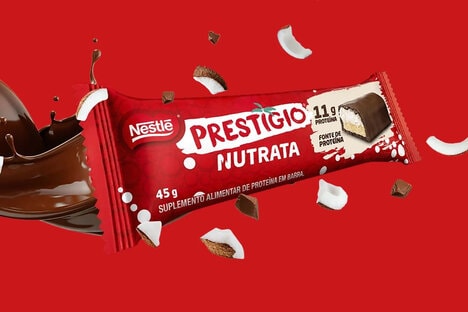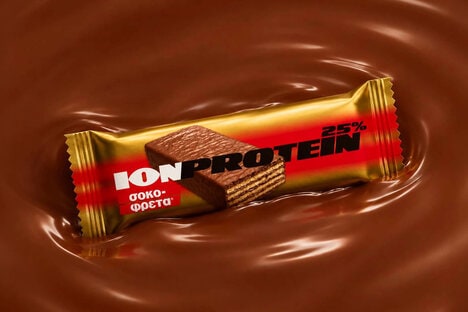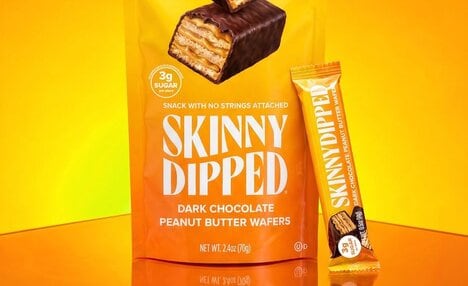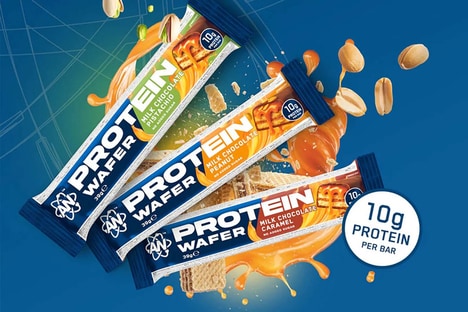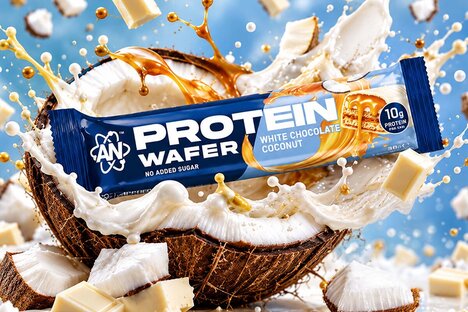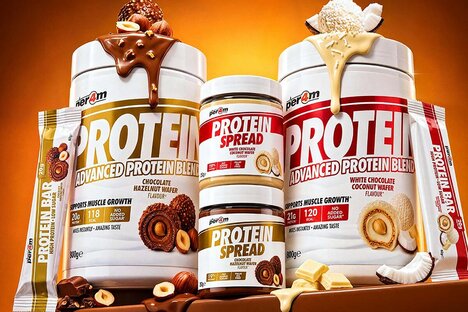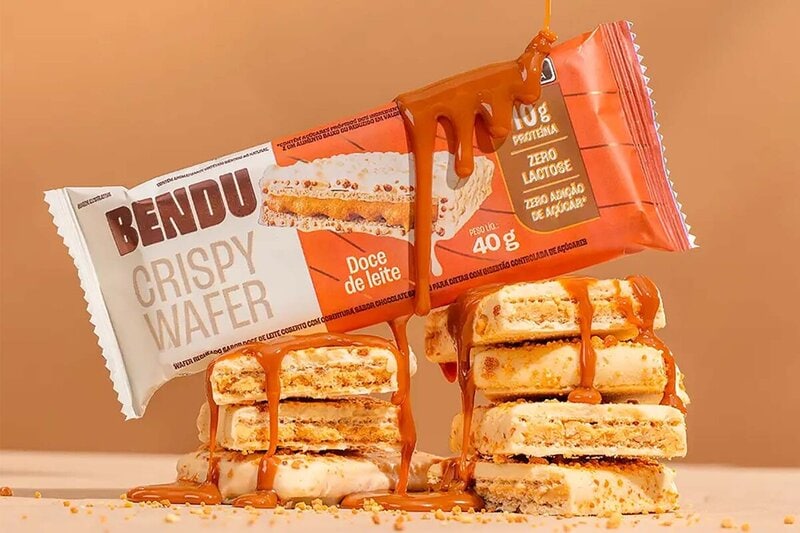
Bendu is expanding its ‘Crispy Wafer’ range in Brazil with a ‘Doce de Leite’ edition that gives protein snack buyers a dessert-style filling within the brand’s crisp bar format. The bar layers creamy milk caramel between its wafers, bringing one of Brazil’s best-known sweets into a portable protein snack.
Cookie pieces in the coating add extra crunch for a more textured bite, and each bar delivers 10 grams of protein with 187 calories. Bendu sells boxes of 12 directly in Brazil for R$166.90.
Direct-to-consumer availability in Brazil turns the flavor into an easy pantry refill for buyers who already rotate protein bars into daily snacking. ‘Doce de Leite’ also widens the protein wafer pitch toward familiar dessert flavors, giving Bendu room to compete on taste while maintaining the bar’s functional 10-gram protein content.
Image Credit: Stack3d
Key Themes Behind This Trend
- Dessert-flavored Protein Snacks
- Familiar sweets like doce de leite are creating room for functional snacks that satisfy indulgence while retaining protein-forward positioning.
- Textured Functional Bars
- Layered wafers, cookie pieces, and creamy fillings highlight how multisensory formats can differentiate better-for-you snacks in crowded protein categories.
- Localized Fitness Indulgence
- Regional dessert profiles are becoming a pathway for nutrition brands to build cultural relevance without abandoning calorie and protein benchmarks.
Where This Applies
- Functional Foods
- Protein-enriched snack formats are expanding beyond utility into flavor-led products that blur the line between wellness and confectionery.
- Confectionery
- Classic dessert and caramel profiles are gaining new relevance as confectionery cues migrate into higher-protein, portion-controlled formats.
- Direct-to-consumer Retail
- Online pantry-refill models support niche flavor launches by connecting recurring snack buyers directly with brand-controlled product assortments.