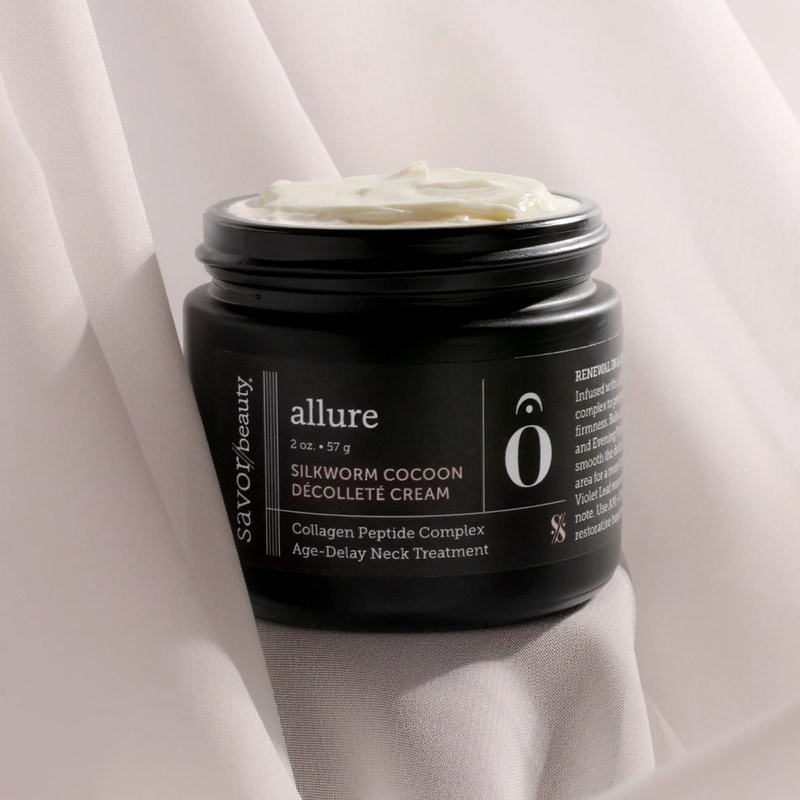
Savor Beauty has launched the Silkworm Cocoon Décolleté Cream. This targeted treatment is formulated specifically for the neck and chest area, which, research indicates, has skin up to 40% thinner than the face with fewer oil glands and a weaker moisture barrier.
Savor Beauty's Silkworm Cocoon Décolleté Cream centers on Fibroin Oligopeptide-1, an upcycled bioactive peptide derived from silkworm cocoons. This is paired with signal peptides, bakuchiol as a gentle botanical alternative to retinol, nourishing botanicals, and gluconolactone to strengthen barrier function, boost elasticity, soften lines, and deliver deep hydration. The upcycled nature of the Fibroin Oligopeptide-1 ingredient also adds a layer of sustainability for the formulation.
Savor Beauty is a brand rooted in honouring Korean heritage while meeting the high-performance expectations of New York City customers.
Image Credit: Savor Beauty
Key Themes Behind This Trend
- Upcycled Bioactive Ingredients
- Upcycled Fibroin Oligopeptide-1 and similar ingredients reduce reliance on virgin feedstocks while enabling high-performance actives with a smaller environmental footprint.
- Targeted Décolleté Treatments
- Focused formulations designed for thinner, oil-poor neck and chest skin create demand for region-specific textures, penetration profiles, and dosing strategies.
- Botanical-biotech Hybrid Actives
- Blends of signal peptides, bakuchiol, and other botanicals paired with biotech-derived peptides open pathways to multifunctional actives that balance efficacy and gentleness.
Where This Applies
- Skincare and Cosmetics
- Premium and targeted skincare segments are positioned to differentiate through specialized décolleté products that marry heritage rituals with clinical ingredient science.
- Sustainable Ingredient Supply Chains
- Supply networks that can reliably source and scale upcycled cocoon proteins present new value propositions around traceability, circularity, and cost optimization.
- Biotech Ingredient Manufacturing
- Advanced biomanufacturing and peptide engineering capabilities enable production of tailored oligopeptides at scale, shifting formulation possibilities toward bespoke active profiles.