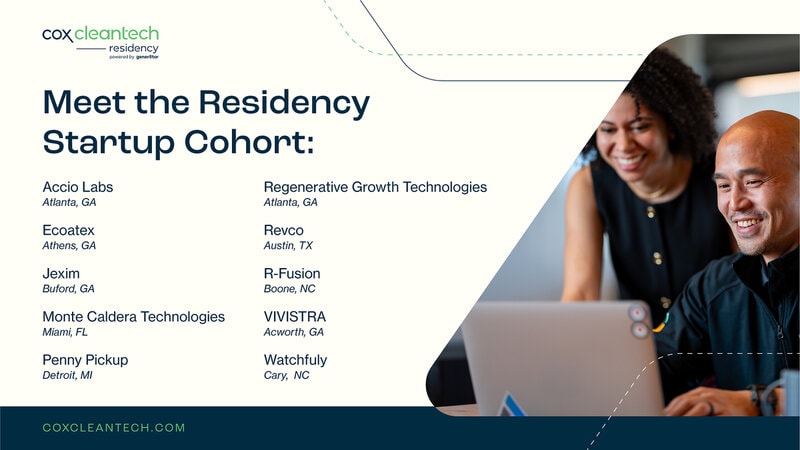
Cox Enterprises has announced the inaugural cohort of ten early-stage startups selected for its Cox Cleantech Residency program. This six-week intensive initiative is developed in partnership with gener8tor and the Georgia Cleantech Innovation Hub, which provides participants with a $10,000 stipend and access to the corporation's extensive network of mentors, operators, and industry leaders. The chosen companies, selected from a competitive pool of 75 applicants across the Southeast, represent a diverse range of solutions aimed at modernizing infrastructure, strengthening supply chains, improving resource efficiency, and building community resilience.
The Cox Cleantech Residency cohort includes an AI platform for utility data management, a bio-based materials producer using agricultural byproducts, a sustainable paving product incorporating spent coffee grounds, a mobile clean energy system replacing diesel generators, and a soil health technology converting organic waste into biofertilizer. The program is designed to help these pre-seed ventures accelerate their path to commercialization by connecting founders with experienced entrepreneurs, investors, and Cox's corporate partners.
Image Credit: Cox Enterprises
What Makes This Trend Stand Out
- Corporate Startup Residencies
- Short, stipend-backed residency models can give corporations earlier access to emerging technologies while helping pre-seed founders validate commercialization pathways.
- Cleantech Infrastructure Modernization
- AI utility platforms, sustainable paving materials, and mobile clean energy systems indicate rising potential for cleaner, more adaptive infrastructure solutions.
- Waste-to-value Materials
- Agricultural byproducts, spent coffee grounds, and organic waste are becoming inputs for scalable products that reduce disposal burdens and create circular supply chains.
Sectors Adopting This
- Cleantech
- Early-stage climate ventures are expanding across energy, materials, and resource efficiency, creating new openings for corporate-backed commercialization.
- Utilities
- Data management platforms and distributed clean power systems are reshaping how utility operators can improve reliability, efficiency, and grid responsiveness.
- Agriculture
- Bio-based materials and soil health technologies are linking farm waste streams with higher-value applications in fertility, manufacturing, and resilience.