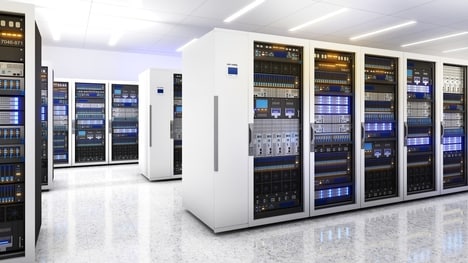

Mirendil announced a multiyear partnership with Google Cloud to secure more than $100 million in compute capacity for its self-improving AI research. Founded by former Anthropic researchers, the AI lab will gain access to Google TPUs, Nvidia GPUs and managed training clusters as it develops systems capable of iteratively improving their own knowledge and performance.
The arrangement gives Mirendil flexibility to match different workloads with different accelerators while using its own software and systems layer to improve hardware utilization. Google positioned the collaboration around large-scale orchestration across heterogeneous infrastructure, while Mirendil plans to apply the compute to research spanning AI, medicine, biology and materials science.
For researchers and enterprise users, the partnership could enable faster experimentation and more efficient training through workload-to-hardware optimization. The deal also reflects growing competition among cloud providers to secure frontier AI labs with large infrastructure commitments.
Image Credit: Mirendil
What Makes This Trend Stand Out
- Heterogeneous AI Infrastructure
- Multi-accelerator environments create room for platforms that dynamically route AI workloads across TPUs, GPUs and managed clusters for better performance economics.
- Self-improving AI Systems
- Research focused on models that iteratively enhance their own knowledge and capabilities signals new demand for compute architectures built around continuous experimentation.
- Frontier Lab Cloud Deals
- Large cloud commitments with AI labs are reshaping competitive advantage by tying advanced research roadmaps to scalable infrastructure access.
Sectors Adopting This
- Cloud Computing
- Cloud providers are differentiating through specialized AI infrastructure, orchestration layers and capacity agreements designed for high-intensity research workloads.
- Artificial Intelligence
- AI developers gain new commercialization pathways as flexible compute access supports faster training cycles, model refinement and applied scientific discovery.
- Biotechnology
- Compute-intensive AI research in medicine and biology expands possibilities for accelerated discovery platforms spanning drug development, protein modeling and biomedical analysis.