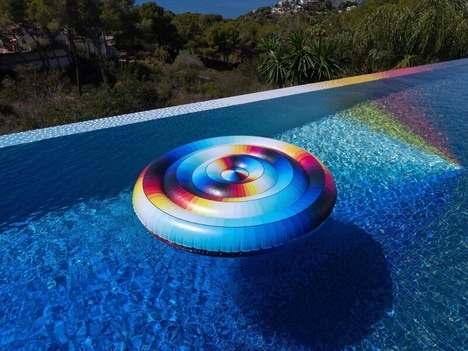
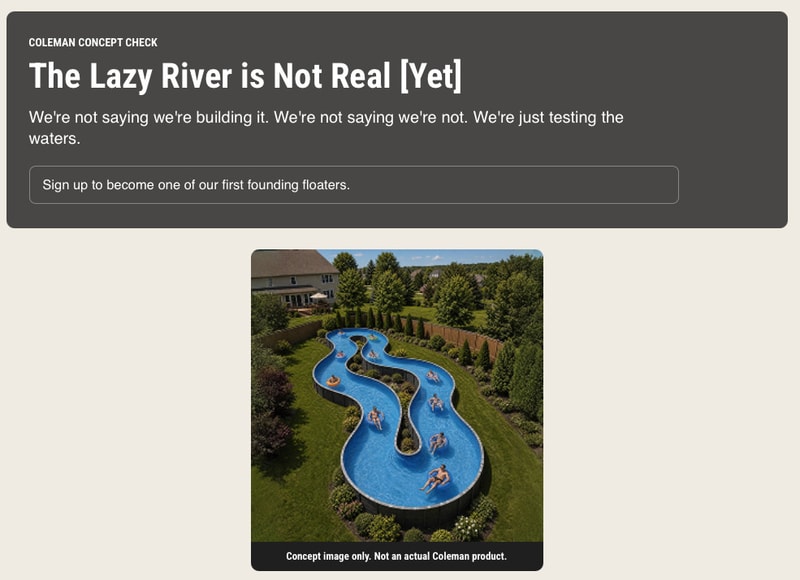
The now-viral Coleman Lazy River might be an artificial intelligence (AI)-generated concept, but the brand has gotten in on its popularity to help use the gusto behind it to catch the attention of consumers. The 200-foot lazy river-inspired pool product went viral a few weeks back only be debunked as fake and confirmed as such by the brand, but Coleman decided to lean into the popularity of the conceptual product. The brand has thus launched a webpage for interested consumers to submit their email to be get their hands on it if it were to ever be manufactured.
The Coleman Lazy River campaign also rewards consumers with a 10% purchase discount using the promo code Lazy River to reward their curiosity in the fake product.
Image Credit: Coleman
Why This Trend Is Growing
- AI-generated Concept Hype
- Viral fictional products are becoming market signals that reveal unmet consumer desires before traditional research or prototyping begins.
- Reactive Brand Campaigns
- Brands that quickly respond to internet-born demand can convert cultural momentum into measurable engagement, lead capture, and sales incentives.
- Fantasy Product Validation
- Imagined product concepts provide a low-cost path for testing consumer appetite around novel formats that may otherwise seem too niche or risky.
Industries Being Reshaped
- Outdoor Recreation
- Consumer enthusiasm for playful, oversized leisure concepts suggests room for unconventional products that blend backyard entertainment with destination-style experiences.
- Consumer Goods
- AI-inspired product virality highlights how household brands can use speculative concepts to identify fresh merchandising opportunities and strengthen audience relationships.
- Digital Marketing
- The fusion of social listening, viral content, and conversion-focused landing pages creates new campaign models built around real-time cultural participation.