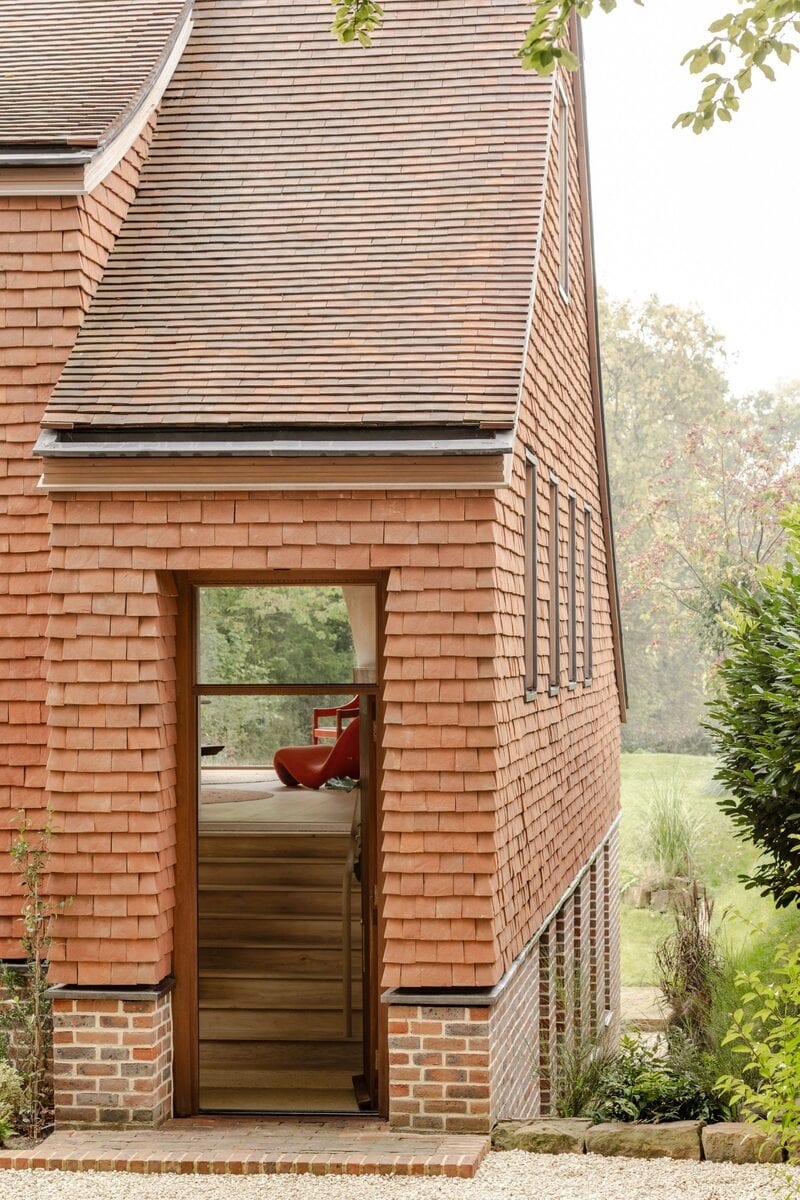
Clay Rise in West Hoathly, West Sussex, is a three-bedroom residence designed and built by Templeton Ford that responds to local tradition, landscape and multigenerational living needs. The home drew inspiration from regional vernacular forms and materials, with a handmade brick skin fired from clay excavated on site and a sweeping, tiered red clay-tiled roof that references the pitched roofs of Sussex cottages. The building is partially embedded into the hillside, creating a split-level plan that provides a self-contained two-bedroom apartment on the lower level and the main living spaces and primary suite above. Large openings on the south-facing façade frame views toward neighbouring fields and the South Downs, and the curving roofline extends down to define exterior spaces and internal circulation.
The interior palette combines lime-plastered walls, exposed stone and timber floors, and deep timber reveals for a tactile, calm environment. A curved CNC-cut staircase finished in lime plaster acts as a focal point, echoing the exterior roof geometry and linking social spaces. Passive design strategies include orientation for solar gain, cross-ventilation through operable windows, and a central stair void that functions as a thermal chimney to moderate internal temperatures.
Image Credit: French + Tye
Key Themes Behind This Trend
- Sustainable Architecture
- A surge in sustainable architecture is transforming traditional building practices by incorporating locally sourced materials and passive design strategies.
- Vernacular Design
- Vernacular design is gaining popularity as a way to honor regional traditions, integrating local aesthetics and materials into modern structures.
- Multigenerational Living Spaces
- The demand for homes accommodating multigenerational living is promoting innovative designs featuring self-contained units to support diverse family needs.
Where This Applies
- Green Construction
- Green construction is rapidly evolving to prioritize eco-friendly materials and energy-efficient designs in new builds.
- Real Estate Development
- Real estate development is increasingly influenced by the incorporation of flexible living spaces tailored to different generational preferences.
- Interior Design
- In the interior design industry, there's a growing trend to blend natural materials with functional aesthetics for creating calming, tactile environments.